







What's Happening?
The Artemis II mission, a pivotal part of NASA's efforts to return humans to the Moon, is nearing its conclusion as the crew prepares for re-entry into Earth's atmosphere. The mission involved a successful flyby of the Moon, testing critical systems for future
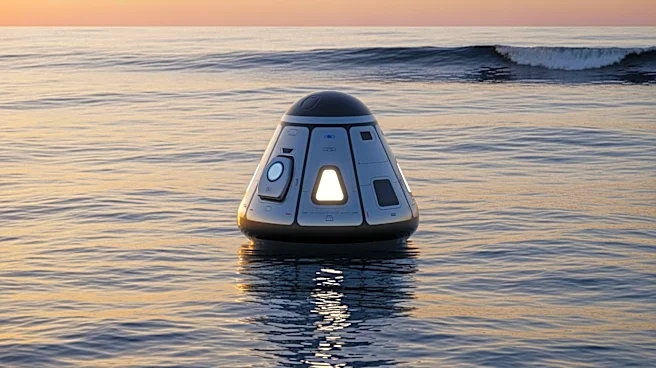
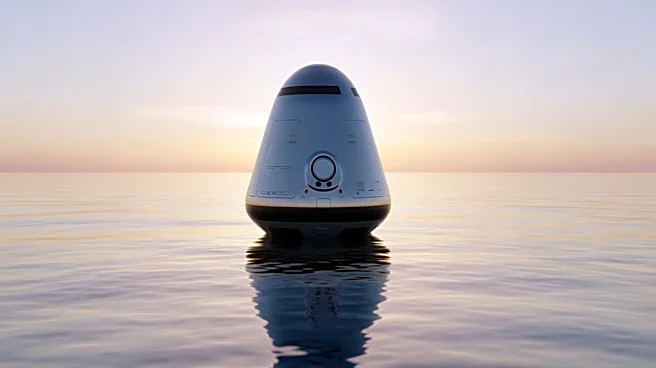
lunar missions. The four astronauts—Reid Wiseman, Victor Glover, Christina Koch, and Jeremy Hansen—are set to splash down in the Pacific Ocean. The re-entry phase is considered the most dangerous part of the mission, with the Orion capsule expected to endure extreme temperatures and G-forces. NASA has adjusted the re-entry trajectory to minimize heat stress on the spacecraft.
Why It's Important?
The Artemis II mission is a critical step in NASA's Artemis program, which aims to establish a sustainable human presence on the Moon. The mission's success will validate the systems necessary for future lunar landings, including life support, navigation, and propulsion. The re-entry phase is particularly significant due to concerns about the heat shield, which showed unexpected damage during the uncrewed Artemis I mission. A successful re-entry and splashdown will enhance confidence in NASA's ability to conduct future deep-space missions and support the broader goal of lunar exploration.
What's Next?
Upon successful splashdown, recovery teams will secure the Orion capsule and extract the astronauts. The crew will undergo medical evaluations before returning to NASA's Johnson Space Center. The mission's outcome will inform the planning of future Artemis missions, including Artemis III, which aims to land astronauts on the Moon. The success of Artemis II will also contribute to international collaboration and partnerships in space exploration.