



What's Happening?
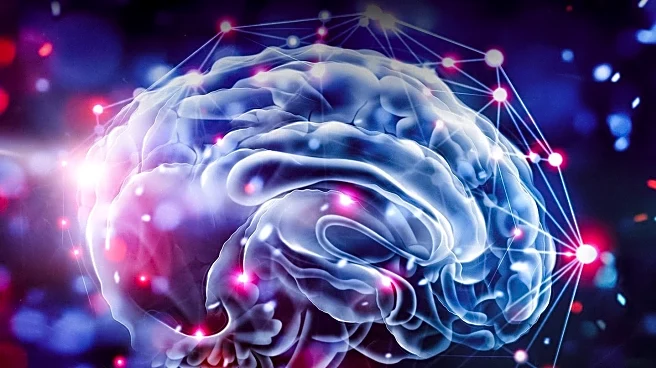
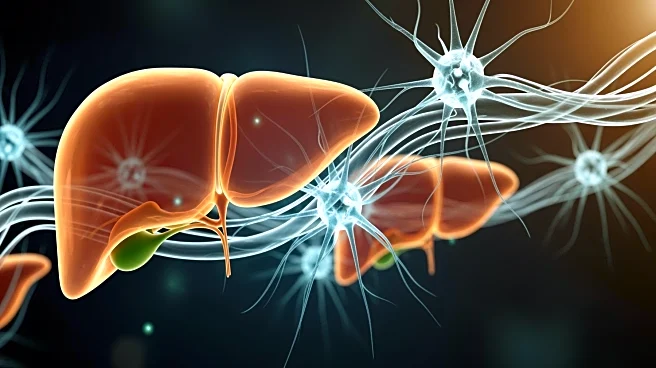
Researchers at the Feinstein Institutes for Medical Research have identified early brain warning signs associated with severe liver damage. The study, published in Theranostics, utilized non-invasive brain scan technology to detect neuroinflammation and
metabolic changes in the brain during acute liver injury (ALI) and acute liver failure (ALF). This research, led by Dr. Valentin A. Pavlov, highlights the potential for earlier diagnosis and targeted treatment of hepatic encephalopathy, a severe brain dysfunction linked to liver failure. The findings suggest that specific brain regions, such as the thalamus and hippocampus, show significant changes in energy metabolism and connectivity early in the disease process.
Why It's Important?
This research is crucial as it offers a new diagnostic approach for hepatic encephalopathy, a condition that is often difficult to diagnose and treat. By identifying early brain changes, healthcare providers can potentially intervene sooner, improving patient outcomes and reducing the risk of severe complications. The study also opens up possibilities for applying this diagnostic method to other conditions characterized by immune and metabolic dysregulation, such as sepsis-associated encephalopathy. This advancement could lead to more personalized and effective treatment strategies, enhancing the overall quality of care for patients with liver-related brain disorders.