







What's Happening?
Newark Liberty International Airport (EWR) operates with three passenger terminals: Terminal A, Terminal B, and Terminal C. Terminal A, the newest facility, accommodates airlines such as Air Canada, American Airlines, Delta, JetBlue, and some United Airlines flights,
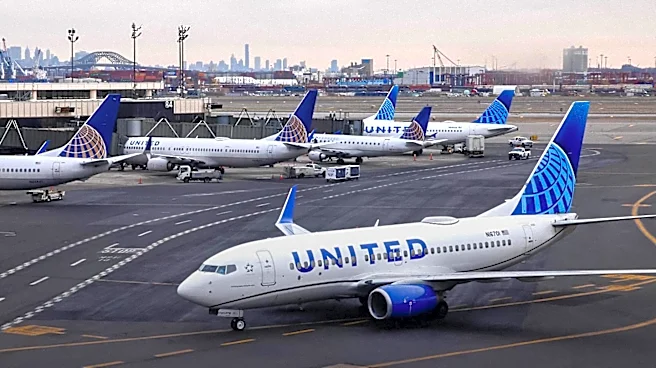
primarily for domestic and Canadian destinations. Terminal B is largely dedicated to international and low-cost carriers, including Aer Lingus, Air France, British Airways, Emirates, and Lufthansa, and also handles international arrivals for JetBlue and some United flights. Terminal C serves as United Airlines' primary hub for both domestic and international departures and arrivals. Travelers are advised to confirm their specific terminal and gate information with their airline or on their boarding pass, as assignments can change. The airport also provides an AirTrain service connecting terminals, parking areas, and the rail station, though its service may be supplemented by buses due to ongoing replacement work.
Why It's Important?
The detailed breakdown of terminal assignments at Newark Liberty International Airport is crucial for efficient travel planning and passenger experience. With a significant number of international and domestic flights, clear guidance on which airlines operate from which terminal helps reduce confusion, minimize delays, and improve overall operational flow. For travelers, knowing their terminal in advance allows for better navigation, especially given the varying check-in levels and customs procedures across terminals. The presence of Terminal C as United Airlines' hub underscores its importance as a major gateway for one of the largest U.S. carriers, impacting a vast number of domestic and international passengers. The ongoing AirTrain replacement also highlights the airport's commitment to infrastructure improvements, which, while potentially causing temporary adjustments, aim to enhance long-term connectivity and accessibility for millions of travelers.
What's Next?
Travelers using Newark Liberty International Airport should continue to verify their terminal assignments directly with their airline or on their boarding pass, as these details are subject to change. The ongoing replacement of the AirTrain system suggests that passengers should check the Port Authority's Newark Airport website for the most current information on inter-terminal transportation, as service adjustments or bus supplements may be in effect. Airlines will likely continue to update their operational information to reflect any changes in terminal usage. For those connecting between terminals, especially on tight schedules, consulting with their airline about the fastest transfer options will be essential. The airport's focus on modernizing facilities, such as the new Terminal A, indicates a continuous effort to improve passenger services and operational efficiency.
Beyond the Headlines
The intricate terminal structure and the dynamic nature of airline assignments at a major hub like Newark Liberty International Airport reflect the complex logistical challenges inherent in managing large-scale air travel. Beyond the immediate convenience for passengers, these operational details have broader implications for airport management, airline scheduling, and regional transportation infrastructure. The continuous investment in new facilities like Terminal A and the replacement of the AirTrain system signify a long-term strategy to enhance the airport's capacity and competitiveness in the highly congested New York metropolitan area. This also impacts local businesses, including ground transportation services, which must adapt to changing pickup and drop-off protocols across different terminals. The efficiency of these operations directly influences the economic activity and connectivity of the entire region, making seamless airport functionality a critical component of urban infrastructure.