




What's Happening?
Fernando Pérez, the Consul General of El Salvador in Utah, visited Timpanogos Elementary School to educate students about El Salvador's culture, traditions, and national symbols. This visit was part of a series of events for Hispanic Heritage Month, which
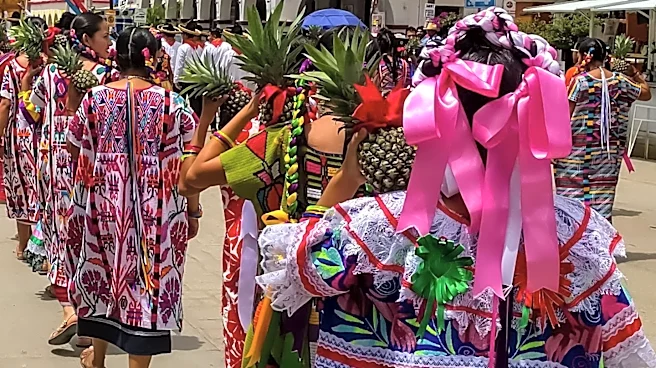
also included interactions with the Peruvian Consul General and the Honorary Consul of Spain. During his presentation, Pérez spoke in Spanish, inviting students to compare Salvadoran customs with their own experiences. He discussed traditional celebrations like La Cofradía de las Flores y las Palmas, recognized by UNESCO, and introduced the country's national trees, the maquilíshuat and bálsamo, highlighting their Indigenous linguistic roots. Students received Salvadoran flags, stickers, and coloring materials featuring cultural symbols and national trees to take home, fostering a deeper understanding of the Central American nation.
Why It's Important?
This cultural exchange is important for promoting diversity and global awareness among U.S. students, particularly during Hispanic Heritage Month. By directly interacting with diplomatic representatives like Consul General Pérez, students gain firsthand exposure to different cultures, languages, and traditions. This initiative helps to broaden their perspectives beyond their immediate environment, fostering empathy and understanding of the diverse backgrounds that contribute to the U.S. social fabric. For the U.S., such programs can strengthen community ties with immigrant populations and enhance diplomatic relations through grassroots cultural appreciation. It also provides an opportunity for students to practice Spanish, a language spoken by a significant portion of the U.S. population, thereby improving their linguistic skills and cultural competence.
What's Next?
Following this successful engagement, similar cultural exchange programs could be expanded to more schools across the U.S., potentially involving other consulates and cultural institutions. The positive reception from students and the educational benefits suggest a model for future initiatives aimed at celebrating diverse heritages. Educational institutions might integrate these cultural lessons into their curriculum, using the provided materials and insights from consular visits to create more comprehensive learning experiences. Continued collaboration between school districts and diplomatic missions could lead to a sustained effort in promoting multicultural understanding and language learning, enriching the educational landscape for American youth.
Beyond the Headlines
The visit by Consul General Pérez underscores the broader role of diplomatic missions in cultural diplomacy, extending beyond traditional political and economic functions. By engaging with elementary school students, these missions contribute to shaping future generations' global outlook and fostering a more inclusive society. This type of interaction can subtly counter stereotypes and misconceptions by presenting authentic cultural narratives. Furthermore, it highlights the importance of preserving and celebrating intangible cultural heritage, as exemplified by the UNESCO recognition of La Cofradía de las Flores y las Palmas, demonstrating how local traditions hold global significance. Such initiatives also reinforce the value of multilingualism and cross-cultural communication in an increasingly interconnected world.