




What's Happening?
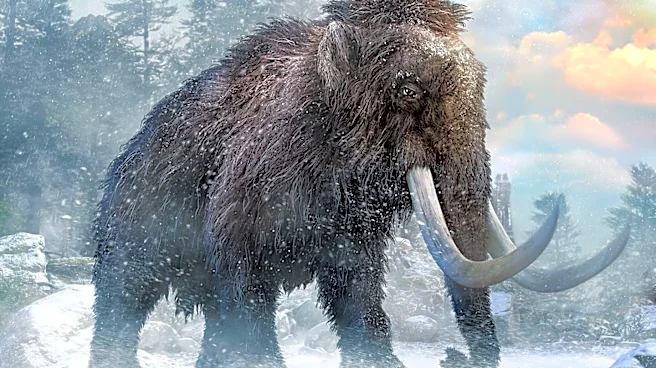
An international team of researchers has analyzed ancient DNA from over 500 mammoth bones, revealing that Ice Age humans selectively targeted female woolly mammoths. The study, published in Current Biology, found that large bone accumulations associated
with human activity were predominantly female, contrasting with the male-dominated remains found in natural settings. This suggests that human hunting practices were a significant factor in these accumulations, possibly due to the more predictable movement patterns of female-led herds or their smaller size compared to males.
Why It's Important?
This research provides new insights into the hunting strategies of Ice Age humans and their interactions with megafauna. Understanding these ancient human behaviors can shed light on the ecological impacts of human activity on prehistoric ecosystems and contribute to our knowledge of human evolution and adaptation. The study also demonstrates the power of ancient DNA analysis in resolving long-standing archaeological questions and enhancing our understanding of past human cultures and their environmental interactions.