






What's Happening?
The PBS NOVA series 'Evolution' has concluded its five-episode run, drawing criticism for what some observers describe as a series of unexplained leaps of logic and a pervasive materialistic storytelling approach. According to Casey Luskin, the series follows
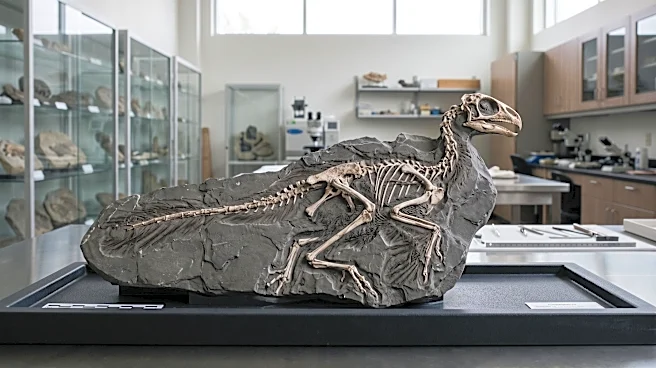
a consistent template: it opens with stunning visuals of modern biological life, poses questions about its origins, and then traces a hypothesized evolutionary journey from simple life forms to complex ones. This narrative often relies on AI animation and enthusiastic scientists presenting fossils as evidence for transformations. Critics argue that while the series begins with 'epistemic humility' by stating 'some scientists think' certain evolutionary paths occurred, it quickly transitions into presenting these hypotheses as established facts, particularly in its portrayal of the 'oldest footstep known to science.'
Why It's Important?
This critique of the PBS 'Evolution' series highlights ongoing debates within the scientific and public spheres regarding the presentation of evolutionary theory. The concern that the series prioritizes 'materialistic storytelling' over empirical substance can influence public perception of science, potentially fostering skepticism or misunderstanding about the scientific method. For educators and policymakers, the way scientific concepts are communicated to a broad audience is critical for promoting scientific literacy. If a major public broadcasting series is perceived as making 'unexplained leaps of logic,' it could undermine trust in scientific institutions and the educational content they provide. This discussion underscores the importance of clear, evidence-based communication in science education, especially on complex and often controversial topics like evolution.
What's Next?
The criticisms leveled against the PBS 'Evolution' series may prompt further discussions among science communicators, educators, and producers about best practices for presenting complex scientific theories to the public. Future science documentaries might face increased scrutiny regarding their narrative choices and the rigor of their scientific explanations. This could lead to a greater emphasis on distinguishing between established scientific consensus, ongoing research, and speculative hypotheses. Additionally, organizations that advocate for different perspectives on evolution may continue to use such critiques to highlight their concerns about how evolution is taught and portrayed in mainstream media. The ongoing dialogue will likely shape how scientific content is developed and consumed in the future.
Beyond the Headlines
The debate surrounding the PBS 'Evolution' series extends beyond mere scientific accuracy to touch upon deeper philosophical and epistemological questions. The critique of 'materialistic storytelling' suggests a concern that the series implicitly promotes a particular worldview, rather than solely presenting scientific findings. This raises questions about the role of public broadcasting in presenting scientific information neutrally and comprehensively, especially when different interpretations exist within the scientific community or among the public. The series' reliance on 'slick production and smiling scientists' as a means of persuasion, as noted by critics, also highlights the challenges of engaging audiences while maintaining scientific integrity. This situation reflects broader societal tensions between scientific inquiry, public understanding, and diverse belief systems.