





What's Happening?
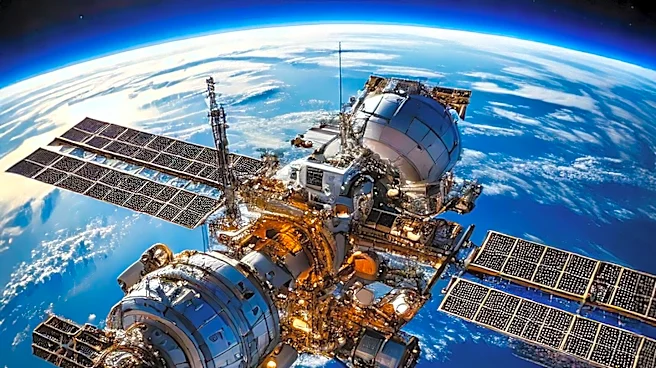
Three members of NASA's Expedition 74 are preparing to return to Earth after completing their mission aboard the International Space Station (ISS). NASA astronaut Chris Williams, along with Roscosmos cosmonauts Sergey Kud-Sverchkov and Sergei Mikaev,
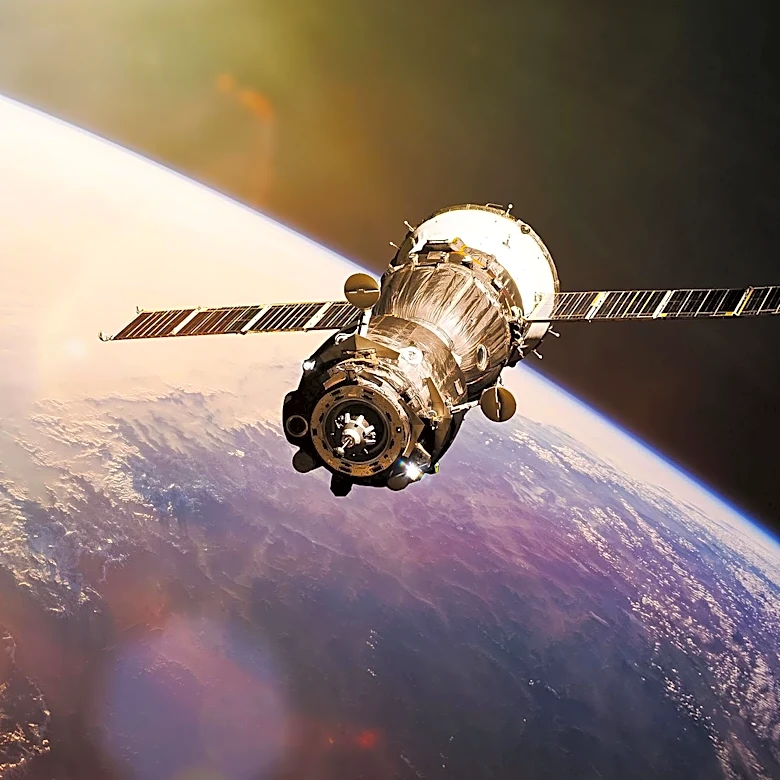
are set to undock from the ISS's Rassvet module in the Soyuz MS-28 spacecraft. Their mission, which began with a launch from Kazakhstan on November 27, 2025, is nearing its conclusion as they prepare for a parachute-assisted landing in Kazakhstan. As they prepare to leave, the crew is handing over responsibilities to the new arrivals, including NASA flight engineer Anil Menon, who arrived on July 14 aboard the Soyuz MS-29. The departing crew is also involved in testing a lower body negative pressure suit designed to help them readjust to Earth's gravity. Meanwhile, the new crew members are transitioning from orientation to full-time research and lab maintenance, focusing on how microgravity affects the human body.
Why It's Important?
The transition of crew members on the ISS is a critical component of maintaining continuous human presence in space, which is essential for ongoing scientific research and international collaboration. The experiments conducted by the departing crew, such as the lower body negative pressure suit tests, contribute to understanding how to mitigate the effects of long-term space travel on the human body. This knowledge is vital for future missions, including potential manned missions to Mars. The arrival of new crew members ensures that research and maintenance activities continue without interruption, supporting the ISS's role as a hub for scientific discovery and technological advancement.
What's Next?
As Expedition 74 concludes, the focus will shift to the new crew members who will continue the research and maintenance activities on the ISS. NASA will release a media advisory with official mission times and dates for the Soyuz landing, which will be covered live. The new crew will continue to adapt to life in microgravity while conducting experiments that could have implications for future space exploration missions. The ongoing research will also provide insights into the physiological changes that occur in space, which are crucial for planning long-duration missions beyond low Earth orbit.