








What's Happening?
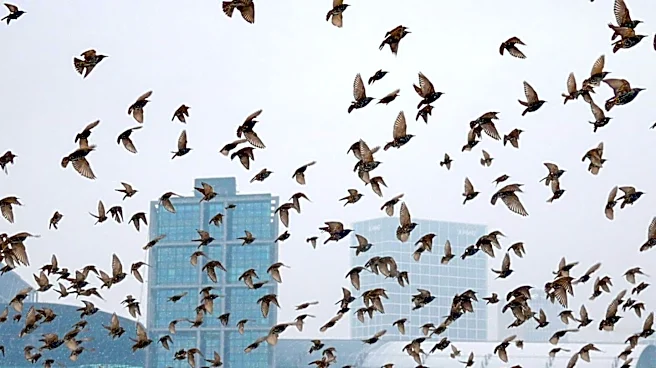
Muskegon County, Michigan, is investigating a potential bird flu risk after a number of wild birds recently died at the Muskegon County Resource Recovery Center. In collaboration with the Michigan Department of Natural Resources, samples have been collected
from the deceased birds and sent for testing for Highly Pathogenic Avian Influenza (HPAI), commonly known as bird flu. The public is advised that the risk of bird flu spreading to people is low, but contact with sick or dead birds should be avoided. Residents are urged not to touch, handle, or move sick or dead birds, and to keep children and pets away from them. Handwashing after outdoor activities is also recommended. For hunters or individuals handling wild birds, wearing gloves and following recommended safety precautions are advised. Bird flu is known to be widespread in wild bird populations, with cases often increasing during spring and fall migration periods.
Why It's Important?
The investigation into bird deaths in Muskegon County highlights the ongoing presence and potential threat of avian influenza in wild bird populations across the U.S. While the immediate risk to humans is considered low, the virus's prevalence in wild birds poses a continuous concern for domestic poultry industries and public health. Outbreaks in commercial poultry operations can lead to significant economic losses due due to culling of affected flocks, trade restrictions, and increased bioseosecurity measures. The Michigan Department of Natural Resources and the Michigan Department of Agriculture play crucial roles in monitoring and responding to these outbreaks, aiming to prevent wider transmission. Public awareness and adherence to safety guidelines, such as avoiding contact with sick or dead birds, are vital in mitigating potential spread and protecting both human and animal health. The situation underscores the need for continuous surveillance and rapid response mechanisms to manage avian influenza.
What's Next?
Authorities are awaiting the results of the samples sent for testing to confirm the presence of Highly Pathogenic Avian Influenza (HPAI) in the wild birds found in Muskegon County. Depending on the test results, further actions may be taken by the Michigan Department of Natural Resources and the Michigan Department of Agriculture to manage any confirmed outbreak. The public will likely be kept informed about the situation and any updated recommendations. Residents are encouraged to report large numbers of dead wild birds (six or more) to the Michigan Department of Natural Resources and dead domestic birds (chickens, poultry) to the Michigan Department of Agriculture. Continued vigilance and adherence to biosecurity measures, especially for those involved in poultry farming or hunting, will be crucial in preventing further spread.
Beyond the Headlines
The recurring presence of avian influenza, as seen in Muskegon County, points to a broader ecological challenge where human activities intersect with wildlife health. The virus's ability to circulate in wild bird populations means it can be reintroduced into domestic poultry at any time, necessitating constant vigilance and robust biosecurity protocols. Beyond the immediate economic impact on the poultry industry, there's a long-term concern about the potential for the virus to mutate and become more transmissible to humans, although current strains are considered low risk. This ongoing threat underscores the importance of 'One Health' approaches, integrating human, animal, and environmental health surveillance to effectively monitor and respond to zoonotic diseases. The incident also highlights the role of public education in preventing disease transmission and ensuring responsible interaction with wildlife.