




What's Happening?
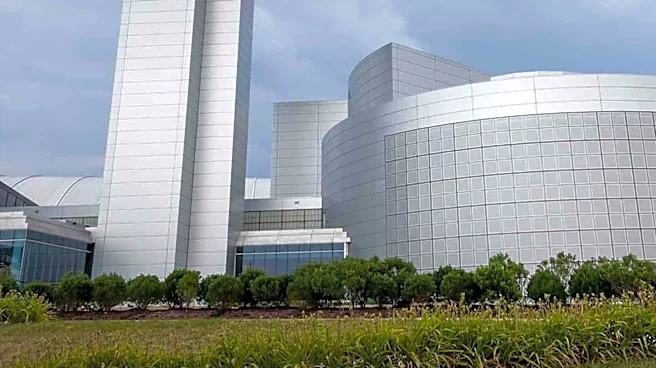
The Museum of Science in Boston is set to unveil its new William and Charlotte Bloomberg Public Science Common on October 10, 2026. This state-of-the-art, 10,000-square-foot performance and presentation space will serve as a central hub for public engagement
with science and human ingenuity. The wing, named in honor of Mike Bloomberg's parents, was made possible by a $155 million donation from Bloomberg Philanthropies. The space is designed to be immersive and multi-use, featuring movable walls, LED video screens, retractable seating, and advanced sound and lighting, including 3D projection mapping technology called Deep Space. The museum's president, Tim Ritchie, emphasized the goal of fostering a love and trust for science among the public.
Why It's Important?
The opening of the Bloomberg Public Science Common represents a significant investment in science education and public engagement in the U.S. The substantial donation from Bloomberg Philanthropies, reportedly a record for science museums in America, underscores the growing recognition of the importance of informal science learning. This new wing will provide a cutting-edge platform for addressing contemporary scientific issues like artificial intelligence, robotics, and bioengineering, making complex topics accessible to a wider audience. By enhancing public understanding and appreciation of science, the museum aims to inspire future generations in STEM fields, contributing to the nation's scientific literacy and innovation capacity. The facility's adaptability also allows for diverse programming, potentially attracting a broader demographic to scientific discourse.
What's Next?
Following a 'soft' opening on October 10, 2026, the Museum of Science will host a day of celebration on October 28, with Mike Bloomberg expected to attend. The museum plans to offer a wide range of public programming within the new space, including presentations, artistic performances, and yet-to-be-conceived events. The success of the Bloomberg Public Science Common will be measured by its ability to attract and engage visitors, foster scientific curiosity, and become a leading venue for science communication. The museum will likely continue to seek partnerships and funding to expand its educational initiatives and maintain its state-of-the-art facilities, further solidifying its role as a key institution in the Boston-Cambridge scientific ecosystem.
Beyond the Headlines
This development highlights a broader trend of philanthropic investment in cultural and educational institutions, particularly in science. Mike Bloomberg's repeated donations to the Museum of Science, totaling over $200 million, reflect a belief in the transformative power of science education and the role of museums in shaping inquisitive minds. The emphasis on addressing 'challenges of any new technology' within the new wing suggests a proactive approach to ethical and societal implications of scientific advancements. This initiative could serve as a model for other science museums seeking to modernize their facilities and programming, fostering a more scientifically literate and engaged public capable of navigating complex technological and environmental issues.