




What's Happening?
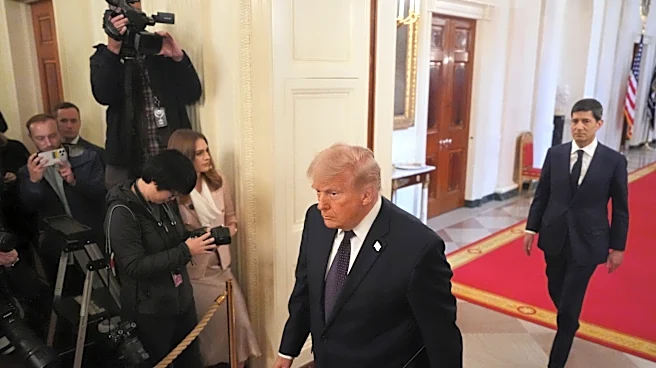
President Donald Trump, aged 79, has been observed appearing drowsy during a recent Oval Office briefing, raising concerns about his health. During the briefing, Trump seemed to briefly doze off while discussing topics such as 'Beautiful, Clean Coal.'
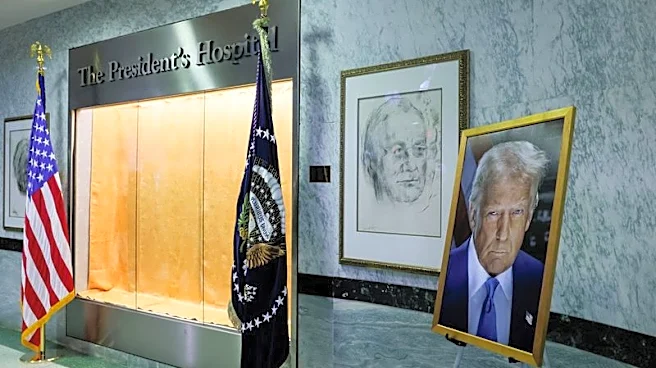
This incident follows his recent visit to Walter Reed National Military Medical Center for a physical exam, the results of which have not been publicly disclosed. Dr. Jonathan Reiner, a former cardiologist for ex-Vice President Dick Cheney, has classified Trump's condition as 'severe daytime somnolence,' a severe illness. Despite these observations, the White House has denied any health issues, launching social media campaigns to counter reports of Trump's drowsiness.
Why It's Important?
The health of President Trump is a significant concern due to its potential impact on his ability to perform presidential duties effectively. Public perception of a leader's health can influence political stability and confidence in governance. The administration's denial and aggressive defense against these reports highlight the sensitivity of the issue. If Trump's health is indeed compromised, it could affect decision-making processes and the execution of national and international policies. The situation also underscores the importance of transparency in the health disclosures of public officials, which can affect public trust and political dynamics.
What's Next?
The White House may continue to address these health concerns through official statements and social media, aiming to reassure the public and maintain confidence in Trump's leadership. Further medical evaluations or public appearances by Trump could either alleviate or exacerbate public concerns. Political opponents and media outlets are likely to continue scrutinizing Trump's health, potentially influencing upcoming political campaigns and elections. The administration's handling of this issue could have lasting implications on public perception and political strategy.