


What's Happening?
Delegations from Russia and Ukraine met in Geneva for U.S.-brokered peace talks, marking nearly four years since Russia's full-scale invasion of Ukraine. The talks, led by U.S. envoy Steve Witkoff, aim to address security and humanitarian issues, with
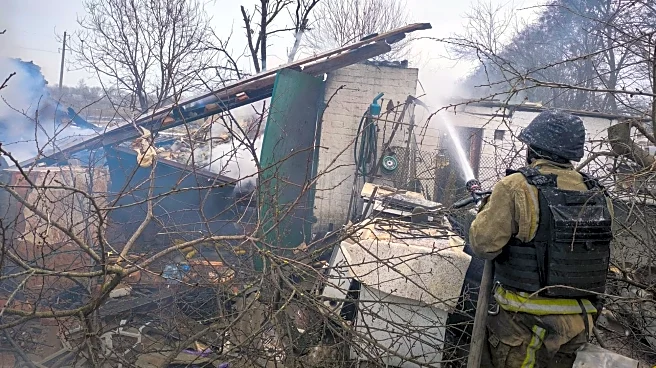
a focus on ceasefire monitoring and territorial disputes. Despite the U.S. setting a June deadline for a settlement, expectations for breakthroughs remain low as both sides hold firm on key issues. Russia demands Ukraine cede control of the Donbas region, while Ukraine seeks security guarantees. The talks occur amid ongoing military actions, including Ukrainian drone strikes on Russian targets and Russian aerial attacks on Ukraine.
Why It's Important?
The Geneva talks are crucial as they represent a significant diplomatic effort to resolve the prolonged conflict between Russia and Ukraine, which has had devastating impacts on both nations. The involvement of the U.S. underscores the international stakes, with potential implications for global security and geopolitical stability. A successful negotiation could lead to a ceasefire and pave the way for rebuilding efforts in Ukraine, while failure to reach an agreement may prolong the conflict, affecting regional and international relations. The talks also highlight the challenges of balancing military and political objectives in peace negotiations.
What's Next?
The talks are set to continue, with military chiefs from the U.S., Russia, and Ukraine discussing ceasefire monitoring and implementation strategies. The U.S. has pressured Ukraine to reach a settlement by June, but the entrenched positions on territorial control and security guarantees suggest that negotiations will be complex and challenging. The ongoing military actions by both sides could further complicate the diplomatic efforts, and the international community will be closely watching for any signs of progress or setbacks.