



What's Happening?
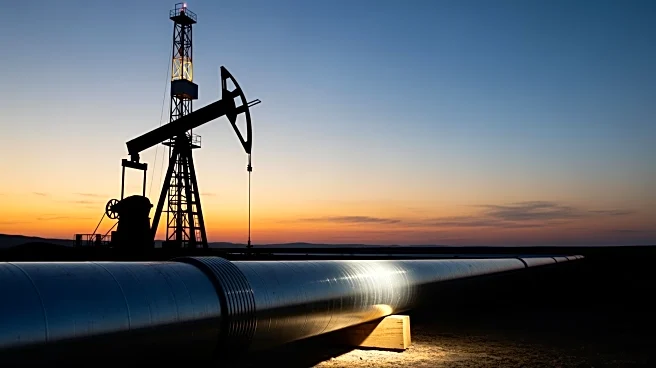
DNO ASA has announced the resumption of its drilling operations in the Kurdistan region of Iraq, following a significant milestone of surpassing 500 million barrels of cumulative production from the Tawke license. This development comes after a two-and-a-half-year
hiatus in new drilling activities due to the 2023 export pipeline shutdown. The company plans to initiate a new production well targeting the shallow Jeribe reservoir in the Tawke field. DNO has mobilized two rigs, the DQE-51 and its own Sindy rig, to execute a program of eight wells through 2026, aiming to increase gross operated output by 25% to approximately 100,000 barrels per day. Despite the pause in drilling, DNO has maintained production levels at around 80,000 barrels per day through well optimization. Executive Chairman Bijan Mossavar-Rahmani expressed confidence in the company's ability to further exploit resources in the region, citing DNO's extensive experience in managing complex reservoirs.
Why It's Important?
The resumption of drilling by DNO in Kurdistan is significant for the region's oil industry, as it marks a step towards increasing production capacity and stabilizing output levels. This move is likely to have economic implications for the Kurdistan region, potentially boosting local employment and contributing to regional economic growth. For DNO, this development reinforces its position as a key player in the Kurdistan oil sector, enhancing its operational footprint and potentially increasing its market share. The increased production capacity could also impact global oil markets by contributing to supply levels, which may influence oil prices. Additionally, DNO's strategic focus on both Kurdistan and the Norwegian Continental Shelf highlights its commitment to diversifying its portfolio and strengthening its presence in key oil-producing regions.
What's Next?
DNO's drilling campaign in Kurdistan is expected to continue through 2026, with the company planning to drill a total of eight wells. The success of this campaign could lead to further investments in the region and potentially attract other international oil companies to explore opportunities in Kurdistan. Stakeholders, including local governments and industry partners, will likely monitor the progress of DNO's operations closely, as the outcomes could influence future policy decisions and investment strategies. Additionally, the company's ability to maintain and increase production levels will be critical in determining its long-term success and competitiveness in the global oil market.