




What's Happening?
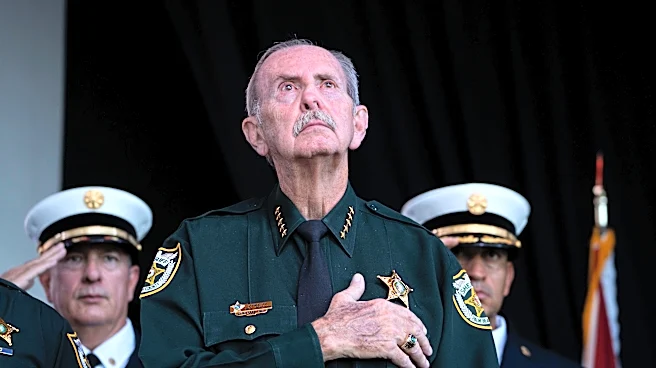
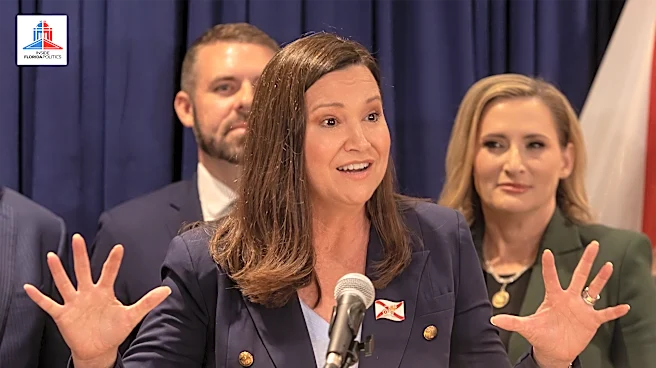
Miami-Dade Sheriff Rosie Cordero-Stutz has publicly announced her support for Florida's proposed Amendment 3, which aims to increase homestead exemptions for non-school property taxes. This stance places her in opposition to the Florida Sheriffs Association
and other law enforcement officials, who argue that the measure could lead to significant reductions in funding for local services, including police and fire rescue. Amendment 3, set to appear on the November 3 ballot, proposes raising the homestead exemption from $50,000 to $150,000 in 2027 and $250,000 in 2028. It also seeks to reduce the annual cap on assessment increases for non-homestead properties from 10% to 5%. Cordero-Stutz contends that Florida homeowners deserve substantial relief from rising property taxes and that voters should not be forced to choose between lower taxes and public safety. She emphasizes that local government agencies have a responsibility to identify efficiencies and ensure effective use of taxpayer dollars. Miami-Dade County officials are currently preparing for the potential financial impact, with initial revenue loss estimates at approximately $386 million, projected to increase in subsequent years.
Why It's Important?
The debate surrounding Florida's Amendment 3 highlights a significant tension between providing property tax relief to homeowners and maintaining adequate funding for essential local government services, particularly public safety. The Florida Sheriffs Association's warning that the amendment could strip billions of dollars from the primary funding source for local public safety agencies underscores the potential for widespread financial strain on counties. If the amendment passes, the projected revenue losses could force local governments to make difficult budgetary decisions, potentially impacting the level of services provided to residents. For instance, Miami-Dade County's estimated initial revenue loss of $386 million, with further increases anticipated, could necessitate cuts in various departments, including law enforcement. Sheriff Cordero-Stutz's own department, with a budget of roughly $1 billion, is already facing a shortage of about 150 deputies and has sought additional funding. This situation illustrates the broader challenge for local governments in balancing fiscal responsibility with the demand for robust public services, and it could set a precedent for how other states approach property tax reform and local government funding.
What's Next?
Florida voters will decide on Amendment 3 on November 3, requiring approval from at least 60% of voters to take effect. The outcome will significantly influence the financial landscape for local governments across Florida. If the amendment passes, Miami-Dade County and other counties will need to implement strategies to mitigate the projected revenue losses, which could involve identifying new revenue streams, re-evaluating existing expenditures, or potentially reducing services. The amendment has also become a key issue in Florida's gubernatorial race, with Democratic candidate David Jolly opposing it due to concerns about potential financial crises for counties and impacts on law enforcement, while Republican candidate Byron Donalds supports it for property tax relief, acknowledging potential challenges for fiscally constrained counties. The ongoing discussions and proposed alternatives, such as allowing counties greater control over homestead exemption structures, suggest that the debate over property tax relief and local government funding will continue regardless of the amendment's outcome, as stakeholders seek sustainable solutions.
Beyond the Headlines
The divergence in opinion between Miami-Dade Sheriff Cordero-Stutz and the Florida Sheriffs Association on Amendment 3 reveals a deeper philosophical divide within law enforcement and local governance regarding fiscal responsibility and public service provision. Cordero-Stutz's argument that voters should not have to choose between lower taxes and public safety suggests a belief in the government's capacity to find efficiencies and manage budgets effectively without compromising essential services. This perspective challenges the traditional narrative that tax reductions inevitably lead to service cuts. Conversely, the Florida Sheriffs Association's strong opposition highlights the practical concerns about the direct impact of revenue loss on operational capabilities and public safety. This debate also touches upon the broader issue of local autonomy versus state-mandated financial policies. The outcome of Amendment 3 could influence future legislative efforts to balance property tax relief with the financial stability of local governments, potentially leading to innovative approaches in municipal finance or, conversely, exacerbating existing tensions between taxpayer demands and public service needs. It also underscores the increasing politicization of local financial issues, even within traditionally non-partisan roles like sheriff.