

What's Happening?
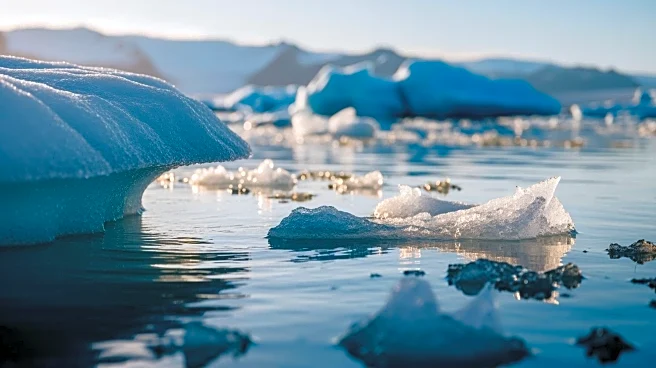
A recent study published in Nature Climate Change highlights the alarming rate at which glaciers are disappearing globally. Currently, approximately 1,000 glaciers are lost each year, but this number is expected to increase significantly. By 2041, even
if global warming is limited to 1.5°C, the annual loss could reach 2,000 glaciers. Under a scenario where temperatures rise by 2.7°C, around 3,000 glaciers could vanish annually between 2040 and 2060. In a worst-case scenario of 4°C warming, up to 4,000 glaciers could disappear each year by the mid-2050s. The study emphasizes the urgent need for ambitious climate policies to mitigate these losses.
Why It's Important?
The accelerated loss of glaciers poses significant environmental and socio-economic challenges. Glaciers are crucial for maintaining regional water supplies, supporting biodiversity, and sustaining local economies through tourism. Their disappearance could lead to water shortages, loss of habitat, and economic decline in affected regions. The study underscores the importance of global efforts to curb greenhouse gas emissions and adhere to international climate agreements like the Paris Agreement. Failure to do so could result in severe consequences for ecosystems and human communities worldwide.
What's Next?
The study calls for immediate and robust climate action to prevent the worst-case scenarios. Governments and policymakers are urged to implement and strengthen climate policies to limit global warming. The research highlights the need for international cooperation and commitment to reducing emissions and investing in sustainable practices. As the world approaches critical temperature thresholds, the focus will be on monitoring glacier loss and adapting strategies to mitigate the impacts on vulnerable regions.