





What's Happening?
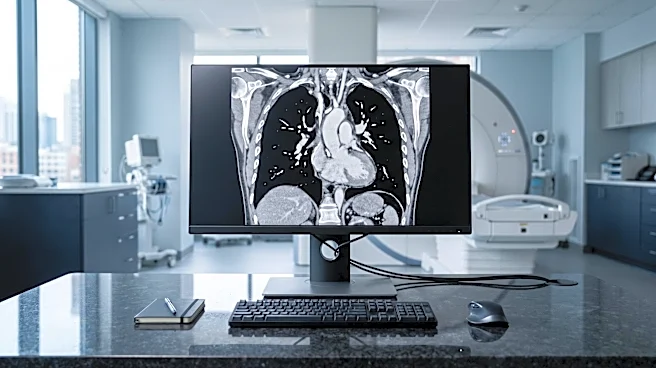
Mosaic Clinical Technologies, Inc. (Mosaic) announced that its AI-assisted reporting application, Mosaic Reporting™, has exceeded 100,000 daily radiology reports. This milestone was reached by radiologists utilizing the application within MosaicOS, the company's
platform. The software was first clinically deployed in April 2025 and became commercially available to hospitals and health systems in June 2026. Mosaic developed this AI-assisted tool to enhance efficiency and reduce the administrative burden associated with traditional reporting methods. The application now handles 75% of the reports signed by radiologists at Radiology Partners Clinical Services (RP Clinical Services) on a typical day, with over 14 million exams reported on the technology to date. More than 2,200 radiologists across 74 RP Clinical Services affiliated practices have transitioned to Mosaic Reporting, moving away from legacy tools like PowerScribe 360. The system allows radiologists to dictate in natural language, automatically organizing findings into structured reports and drafting impressions for review.
Why It's Important?
This achievement signifies a substantial advancement in the integration of artificial intelligence into healthcare, particularly in radiology. The widespread adoption of Mosaic Reporting by a large network of radiologists suggests a significant shift towards AI-driven workflows, potentially improving diagnostic efficiency and consistency. By automating report structuring and impression drafting, the technology aims to reduce the time radiologists spend on administrative tasks, allowing them to focus more on image interpretation and patient care. The inclusion of evidence-based Best Practice Recommendations (BPRs) for follow-up findings is designed to standardize patient care and reduce variability, which could lead to better patient outcomes. This development also highlights the growing trend of AI-drafted reports becoming a standard in radiology, indicating a future where AI plays an even more central role in medical diagnostics.
What's Next?
Mosaic Clinical Technologies plans to further integrate AI-drafted reports into standard radiology practices. Investigational vision-language models (VLMs) from Cognita Imaging, Inc., Mosaic’s advanced AI lab, have already drafted nearly 8 million exams for radiologist review under a research protocol, averaging over 37,000 exams daily. These AI-drafted findings flow directly into the report for radiologists to review, edit, and sign, eliminating the need for separate windows or copy-pasting. Mosaic will demonstrate Mosaic Reporting at the upcoming Radiological Society of North America (RSNA) annual meeting from November 29 to December 3 in Chicago. This event will provide an opportunity for practice and health system leaders to observe the technology firsthand and learn about Mosaic’s latest research, potentially leading to broader adoption across the U.S. healthcare system.
Beyond the Headlines
The rapid adoption and scaling of AI-assisted reporting in radiology raise broader implications for the medical profession. While the technology promises increased efficiency and standardization, it also prompts discussions about the evolving role of radiologists. The shift towards AI drafting reports means radiologists may spend less time on dictation and formatting and more time on critical review, complex case analysis, and direct patient consultation. This could lead to a redefinition of training and skill sets required for future radiologists. Furthermore, the integration of AI in diagnostics brings ethical considerations regarding accountability for AI-generated content and the potential for algorithmic bias in medical interpretations. Ensuring the accuracy, reliability, and ethical deployment of these AI systems will be crucial as they become more pervasive in healthcare.