



What's Happening?
A U.S. charity operating in Gaza, the Gaza Children Village, intends to implement artificial intelligence (AI) to monitor classroom conversations for speech deemed 'hateful' or 'inciting.' The charity's founder, Dr. David Hasan, a neurosurgeon born in Kuwait
to Palestinian parents and now teaching at Duke University, outlined these plans in a recent webinar. The initiative stems from concerns that teachers might deviate from a curriculum designed to promote peace and tolerance. The schools, known as Academies of Hope, aim to provide education, meals, and medical/psychological care to thousands of children in central and southern Gaza, many of whom lost family members during the war. The curriculum is based on the Palestinian Authority curriculum but has removed language that Hasan believes glorified violence or encouraged anti-Israel or antisemitic beliefs. The monitoring technology has reportedly been tested and is planned for deployment in dozens of classrooms, with recordings stored for 72 hours and warnings sent to Hasan if problematic language is detected.
Why It's Important?
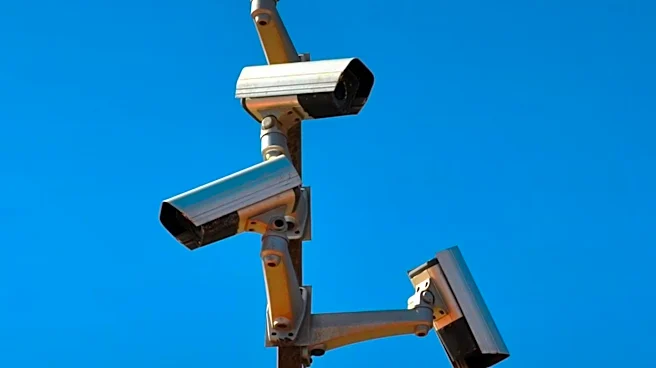
This development raises significant ethical, safety, and privacy concerns, particularly in a region like Gaza where surveillance technology has been extensively used. Critics, including Palestinian and advocacy groups, argue that such monitoring could strip Palestinians of their autonomy in deciding their children's education and control the minds of new generations. Amjad Iraqi, a senior Israel and Palestinian Territories analyst for the International Crisis Group, stated that Israel has 'weaponized information to such a dystopian degree that many Palestinians feel they cannot utter a word, type a thought, or twitch an eye without fearing it could be seized upon.' The use of AI for surveillance in classrooms could set a precedent for similar applications in other conflict zones or sensitive educational environments, potentially impacting academic freedom and open discourse. An official from an aid group partnering with the Gaza Children Village indicated that the use of cameras could lead them to reconsider their collaboration, highlighting the potential for such policies to disrupt humanitarian efforts.
What's Next?
It remains unclear when the classroom monitoring will commence, what specific language will trigger flags, and whether teachers, students, and their families have been fully informed about these plans. The charity's board member, Bishara Bahbah, a Palestinian American political activist, expressed unawareness of the monitoring plans and stated that while cameras for performance monitoring are acceptable, those used to silence free exchange are not. The Palestinian Authority's spokesperson, Mohammad AbuAlrob, indicated that using surveillance in classrooms would cross 'an important line.' The charity's partnerships with North American, Israeli, and European aid organizations and hospitals could be affected by the controversy. The U.S. Government Accountability Office has previously reported on 'problematic textbook content' in Gaza, suggesting ongoing scrutiny of educational materials in the region. The implementation of this AI monitoring system will likely face continued scrutiny from human rights organizations, educational bodies, and international aid groups.
Beyond the Headlines
The proposed AI monitoring system in Gaza classrooms touches upon deeper implications concerning the intersection of technology, education, and conflict. It highlights the complex challenges of promoting peace and tolerance in post-conflict settings while respecting cultural autonomy and individual freedoms. The debate over what constitutes 'hateful' or 'inciting' speech, and who defines it, is central to this issue, especially when external entities impose such definitions on a local population. The initiative also underscores the growing trend of using AI for surveillance, raising questions about data privacy, algorithmic bias, and the potential for misuse of such powerful tools. The historical context of surveillance in Gaza, particularly by the Israeli military, amplifies fears among Palestinians regarding the potential for this technology to be used for purposes beyond its stated intent, potentially leading to self-censorship and a chilling effect on open expression in educational environments.