

What's Happening?
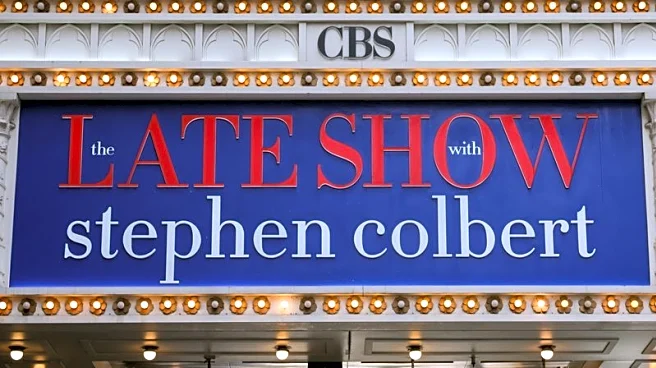
Stephen Colbert, host of 'The Late Show with Stephen Colbert,' publicly criticized CBS for preventing the broadcast of an interview with Texas State Representative James Talarico. Colbert revealed during his show that network lawyers instructed him not
to air the interview, citing potential issues with the Federal Communications Commission (FCC). The FCC had recently reminded networks of the 1934 law requiring equal opportunity for political candidates if their opponents appear on air. CBS stated that the decision was based on legal guidance regarding the FCC's equal-time rule, which could have been triggered by the interview. Instead, the interview was made available on the show's YouTube channel.
Why It's Important?
This incident highlights the ongoing tension between media networks and regulatory bodies like the FCC, particularly concerning political content. The equal-time rule aims to ensure fair media exposure for political candidates, but its application to entertainment and talk shows remains contentious. The decision by CBS reflects the challenges networks face in balancing legal compliance with editorial freedom. This situation underscores the broader implications for media outlets in navigating regulatory frameworks while maintaining their programming choices, potentially affecting how political content is presented to the public.
What's Next?
The situation may prompt further discussions among media networks about the interpretation and application of the FCC's equal-time rule, especially concerning non-traditional news formats like talk shows. Networks might seek clearer guidelines or exemptions for such programming to avoid similar conflicts. Additionally, political candidates and their campaigns may need to consider alternative media strategies to ensure equitable exposure, potentially influencing how political discourse is conducted in the media landscape.