
What's Happening?
The International Maritime Organization (IMO) is facing challenges in regulating black carbon emissions in the Arctic due to geopolitical tensions and conflicting interests among Arctic nations. As global
temperatures rise, the melting of Arctic sea ice has increased marine traffic, leading to higher emissions of black carbon, a pollutant that accelerates ice melt. President Trump has previously intervened to delay regulations that would impose carbon fees on shipping, complicating efforts to address the issue. Countries like France, Germany, and Denmark have proposed requiring ships in Arctic waters to use cleaner fuels, but progress is slow due to geopolitical and economic factors.
Why It's Important?
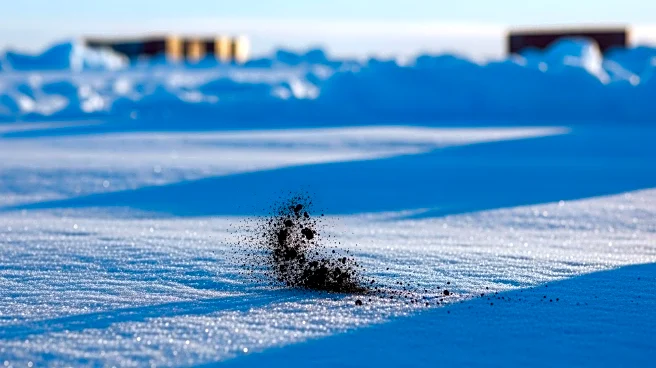
The regulation of black carbon emissions in the Arctic is crucial due to its significant impact on global warming. Black carbon has a warming effect 1,600 times that of carbon dioxide over a 20-year period, making it a critical target for climate change mitigation. The increase in Arctic shipping traffic, driven by economic opportunities and shorter routes, poses environmental risks that could affect global weather patterns. The geopolitical tensions and economic interests complicate international cooperation, highlighting the need for a balanced approach that considers both environmental and economic factors.
What's Next?
The IMO's Pollution Prevention and Response Committee is expected to review proposals for cleaner fuels in Arctic shipping. However, the geopolitical landscape and economic interests of Arctic nations may delay significant progress. The ongoing debate and potential regulatory changes will require careful negotiation among stakeholders to balance environmental protection with economic interests. The outcome of these discussions could set a precedent for future international environmental regulations.
Beyond the Headlines
The situation in the Arctic underscores the complex interplay between environmental policy and geopolitical strategy. The focus on black carbon emissions highlights the broader challenge of addressing climate change in a politically fragmented world. The Arctic's strategic importance for resource extraction and shipping routes adds layers of complexity to environmental negotiations, emphasizing the need for comprehensive international agreements that address both environmental and geopolitical concerns.