


What's Happening?
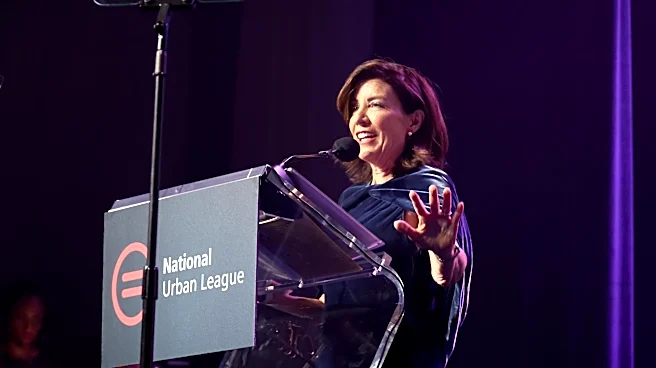
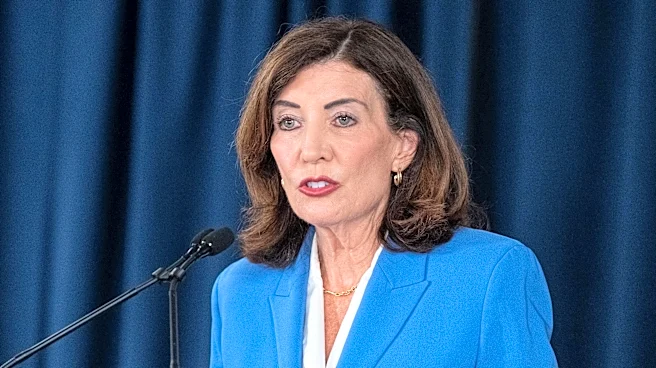
Governor Kathy Hochul announced the official opening of the Urban Civil Rights Museum in Harlem, marking it as New York State's first civil rights museum and the nation's first dedicated to the Northern Civil Rights Movement. The museum is situated at 117
West 125th Street and represents the final component of the National Urban League’s Urban League Empowerment Center, which also houses the organization's national headquarters. This development received nearly $90 million in public funding and tax credit equity. Governor Hochul emphasized that the museum honors leaders and communities who shaped the state and nation, serving as an institution to educate and inspire. The museum features eight permanent galleries covering over four centuries of history, tracing the experiences of Black communities in Northern cities from the Great Migration and Harlem Renaissance through contemporary efforts for justice and equality. It also includes rotating exhibitions and educational programs.
Why It's Important?
The opening of the Urban Civil Rights Museum is significant for several reasons. It establishes a new cultural and educational landmark in Harlem, a historically rich neighborhood, which is expected to attract new visitors and support local businesses, thereby contributing to economic growth. This institution fills a critical gap by focusing specifically on the Northern Civil Rights Movement, a narrative often overshadowed by its Southern counterpart, providing a more comprehensive understanding of the national struggle for civil rights. By preserving and presenting this history, the museum aims to educate future generations about the ongoing work required to build a more just society. Furthermore, its integration within the Urban League Empowerment Center, which also includes 170 affordable homes, highlights a broader commitment to community development and social equity in New York City.
What's Next?
The Urban Civil Rights Museum will continue to develop its programming, including rotating exhibitions and community engagement initiatives, to attract a diverse audience. Its inaugural temporary exhibition, 'Thriving! Harlem as Homeplace,' is already in place. The museum is expected to become a key educational resource for schools and universities, offering insights into the historical and contemporary aspects of civil rights. Local businesses in Harlem anticipate an increase in patronage due to the influx of visitors. The National Urban League will likely leverage the museum to further its mission of racial equity and justice, potentially hosting conferences, workshops, and discussions that align with the museum's themes. The success of this project may also inspire similar initiatives in other Northern cities to highlight their contributions to the civil rights movement.
Beyond the Headlines
The establishment of the Urban Civil Rights Museum in Harlem carries deeper implications beyond its immediate cultural and economic benefits. It serves as a powerful statement about the importance of acknowledging and preserving diverse historical narratives, particularly those that have been underrepresented. By focusing on the Northern Civil Rights Movement, the museum challenges conventional understandings of the civil rights struggle, emphasizing its national scope and complexity. This can foster a more nuanced public discourse on race, equality, and justice in America. Ethically, the museum reinforces the idea that historical memory is crucial for societal progress, reminding visitors that the fight for civil rights is an ongoing process. Culturally, it solidifies Harlem's role as a pivotal center for Black history and activism, potentially inspiring new generations to engage in social justice efforts.