







What's Happening?
Marcin Jakubowski, originally from Communist Poland, has embarked on a mission to empower individuals through open-source design. After moving to the United States, Jakubowski experienced scarcity and decided to address this by creating a self-sufficient
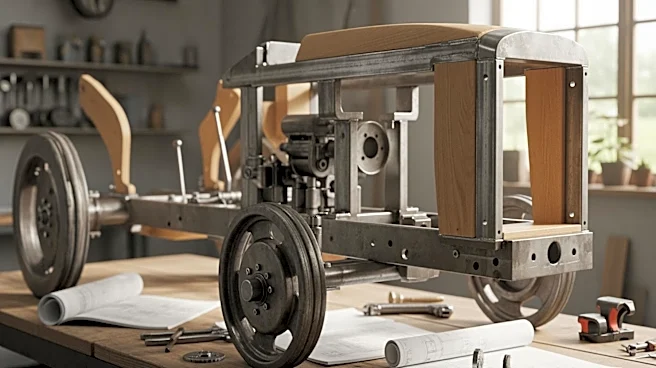
model. He purchased a soybean farm in Missouri and began developing his own tractor after facing high repair costs. Jakubowski shared his designs online, encouraging others to build their own tractors. This initiative led to the creation of the Global Village Construction Set, a list of essential machines for modern life, with blueprints available for public use. His efforts have attracted global volunteers and inspired a TED talk, promoting collaboration and open-source design as a means to reduce scarcity.
Why It's Important?
Jakubowski's initiative highlights the potential of open-source design to democratize access to essential tools and machinery, potentially reducing dependency on commercial products and services. By providing free access to designs, individuals can build necessary equipment, fostering self-sufficiency and reducing costs. This approach could lead to significant changes in how communities address resource scarcity, particularly in rural and economically disadvantaged areas. The movement also encourages collaboration and innovation, potentially leading to more sustainable and efficient solutions in various sectors.
What's Next?
Jakubowski's project continues to evolve, with ongoing efforts to expand the Global Village Construction Set and increase collaboration among volunteers. The initiative may inspire similar projects globally, promoting open-source design as a viable solution to resource scarcity. As more individuals and communities adopt these practices, there could be a shift towards greater self-sufficiency and reduced reliance on commercial products, potentially influencing policy and economic models.
Beyond the Headlines
The ethical implications of Jakubowski's work are profound, as it challenges traditional economic models and promotes a culture of sharing and collaboration. By making essential designs freely available, the initiative questions the necessity of proprietary technology and encourages a shift towards more equitable access to resources. This could lead to long-term changes in how society views ownership and intellectual property, fostering a more inclusive and sustainable approach to innovation.