



What's Happening?
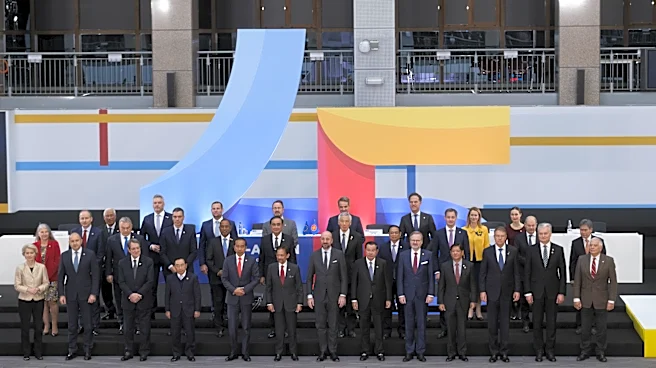
France and Brazil have officially launched the 'Implementation Taskforce' for the Blue NDC Challenge at COP31. This initiative builds upon groundwork established since the third UN Ocean Conference in 2025. The Blue NDC Challenge is a global coalition
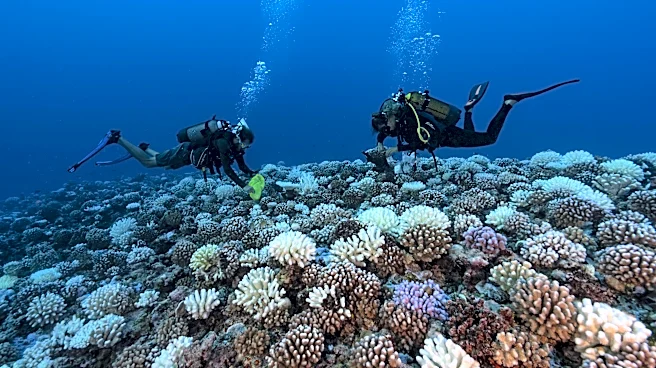
comprising 27 countries across Africa, Asia, the Americas, the Caribbean, Europe, and the Pacific. The newly formed Taskforce aims to assist its member nations in achieving their climate objectives by leveraging the ocean's capabilities to reduce emissions, enhance resilience, and safeguard marine ecosystems. The coalition's expansion signifies a growing momentum to translate ocean-climate ambitions into concrete actions. This development was announced during Ocean Day at COP31, which also saw significant financial commitments, including nearly $1 billion mobilized for mangrove investments and $20 million for coral reef funding.
Why It's Important?
This launch is significant as it provides a structured mechanism for countries to integrate ocean-based measures into their national climate strategies. The ocean plays a crucial role in climate regulation, and by focusing on its power to reduce emissions and build resilience, the Taskforce can contribute substantially to global climate goals. The involvement of 27 countries, including those from the Americas and the Caribbean, highlights a broad international commitment to addressing climate change through marine conservation and sustainable practices. The financial pledges, particularly for mangroves and coral reefs, underscore the economic and ecological value of these ecosystems. Mangroves protect coastlines and sequester carbon, while coral reefs support biodiversity and fisheries. The success of this Taskforce could lead to more effective climate action, protecting vulnerable coastal communities and marine resources, and fostering a more sustainable blue economy globally.
What's Next?
The Implementation Taskforce will now focus on providing tailored support to member countries, helping them translate existing ocean climate commitments into tangible actions. This will involve facilitating collaboration among nations to drive concrete delivery of ocean-based solutions. The COP31 Presidency also published the Antalya Ocean and Seas Compact, urging parties to incorporate ocean measures into their Nationally Determined Contributions (NDCs) and National Adaptation Plans. This compact also emphasizes strengthening ocean observation and early-warning systems in vulnerable countries and improving access to finance. Future steps will likely involve continued monitoring of financial flows for ocean-related initiatives, further expansion of the Blue NDC Challenge, and ongoing efforts to integrate ocean considerations into broader climate policy frameworks, with the goal of achieving global stocktake goals by 2028.
Beyond the Headlines
The establishment of the Blue NDC Implementation Taskforce reflects a deeper understanding of the interconnectedness between ocean health and global climate stability. Historically, ocean-related issues have often been siloed from mainstream climate discussions. This initiative, however, positions the ocean as a central pillar of climate policy, finance, mitigation, and adaptation. It also highlights the critical role of international cooperation and civil society engagement in driving climate action. The emphasis on supporting local communities and integrating traditional knowledge, as suggested by the broader context of ocean governance, could lead to more equitable and effective conservation strategies. The challenge lies in overcoming barriers such as finance, capacity, and technology, especially for developing nations, to ensure that these ambitious commitments translate into meaningful on-the-ground and in-water improvements.