





What's Happening?
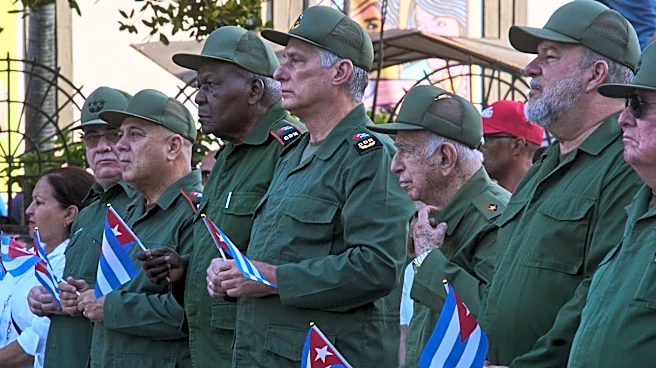
Cuba has confirmed a recent meeting with U.S. officials on the island, marking the first such diplomatic engagement since 2016. The discussions come amid heightened tensions over the U.S. energy blockade imposed on Cuba. According to Alejandro García
del Toro, deputy director general in charge of U.S. affairs at the Cuban Ministry of Foreign Affairs, the U.S. delegation included assistant secretaries of state, while the Cuban side was represented by deputy foreign ministers. The talks were described as respectful and professional, with Cuba prioritizing the lifting of the energy embargo, which it views as an unjustified economic coercion affecting the Cuban population. The U.S. has set conditions for lifting sanctions, including demands for Cuba to end political repression and release political prisoners. In January, President Trump threatened tariffs on countries supplying oil to Cuba, further escalating tensions.
Why It's Important?
The meeting between Cuba and the U.S. is significant as it represents a potential thaw in relations that have been strained by the U.S. energy blockade. The blockade has had substantial economic impacts on Cuba, affecting its energy supply and overall economic stability. The U.S. conditions for lifting sanctions highlight ongoing concerns about human rights and political freedoms in Cuba. The outcome of these talks could influence U.S. foreign policy in the region and impact international trade relations, particularly with countries that engage in oil trade with Cuba. The diplomatic engagement also reflects broader geopolitical dynamics in Latin America, where U.S. policies continue to play a pivotal role.
What's Next?
Future developments will likely depend on the Cuban government's response to U.S. conditions and any subsequent diplomatic engagements. The U.S. may continue to leverage sanctions as a tool to influence political change in Cuba. Meanwhile, Cuba's response to potential U.S. interventions, as indicated by President Miguel Díaz-Canel's readiness to defend the country, could shape the trajectory of bilateral relations. The international community, particularly countries involved in oil trade with Cuba, will be closely monitoring these developments, as they could affect global trade dynamics and regional stability.