



What's Happening?
Residents of Bridgeport, Chicago, are expressing significant anger and concern regarding Amtrak's plans to relocate its maintenance facility from the South Loop to their neighborhood. The $900 million project, which secured nearly $600 million in grant
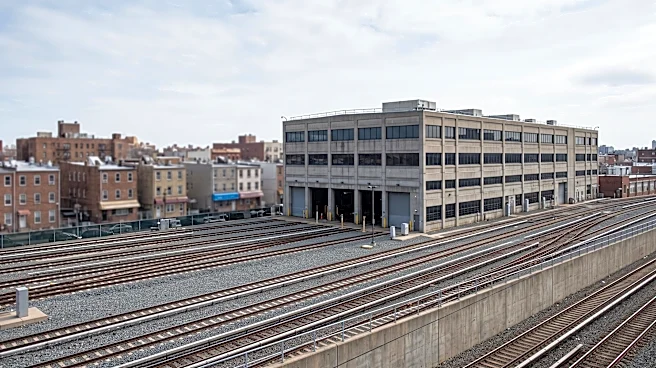
funding from the Federal Railroad Administration, involves constructing an eight-track rail yard and a four-story maintenance building along South Canal Street, adjacent to the White Sox's Rate Field. Community members at a public meeting raised concerns about potential health, noise, environmental, traffic, and safety issues. Additionally, there are fears that this relocation could be linked to a potential move of the White Sox baseball team from Bridgeport, as the freed-up South Loop space is being considered for a new stadium. Ald. Nicole Lee (11th) acknowledged residents' concerns but stated that the projects are not directly linked, reaffirming her commitment to keeping the White Sox in Bridgeport.
Why It's Important?
This situation highlights a significant conflict between urban development, infrastructure projects, and community interests in Chicago. The relocation of Amtrak's maintenance facility, while touted by Amtrak as a modernization effort to improve rail service, is perceived by Bridgeport residents as a threat to their quality of life due to potential environmental and noise pollution. The project's categorical exclusion from federal environmental regulations further exacerbates community distrust. Moreover, the potential connection to the White Sox's relocation adds a layer of complexity, as the team is a long-standing institution in Bridgeport. The loss of the White Sox would not only impact local identity but also have economic repercussions for businesses dependent on game-day traffic. This scenario underscores the challenges of balancing large-scale infrastructure improvements with the well-being and concerns of established residential communities.
What's Next?
Construction on Amtrak's new maintenance facility is slated to begin next year and is expected to be completed by 2028. Another community meeting regarding the project is scheduled for August 26 at Pui Tak Center, where residents will likely continue to voice their opposition and demand answers. Amtrak officials have not commented on the potential link between the rail yard project and the White Sox's future, despite businessman Justin Ishbia's involvement in both the relocation project and his option to buy a majority stake in the White Sox. Ald. Nicole Lee has pledged to keep the White Sox in Bridgeport, indicating ongoing political and community efforts to influence the team's decision. The coming months will likely see continued community activism and discussions between residents, Amtrak, and local officials regarding the project's environmental impact and the future of the White Sox.
Beyond the Headlines
The controversy in Bridgeport extends beyond immediate environmental and noise concerns, touching upon broader issues of urban planning, community displacement, and the influence of private capital in public infrastructure projects. The categorical exclusion from federal environmental regulations raises questions about the transparency and thoroughness of environmental impact assessments for large-scale developments, particularly when they affect residential areas. The involvement of businessman Justin Ishbia, who is financing part of the Amtrak relocation and has an option to acquire the White Sox, suggests a complex interplay of business interests that could shape the future of significant urban land parcels and beloved sports franchises. This situation could set a precedent for how similar large-scale projects are managed in other U.S. cities, emphasizing the need for robust community engagement and accountability from both public and private entities.