
What's Happening?
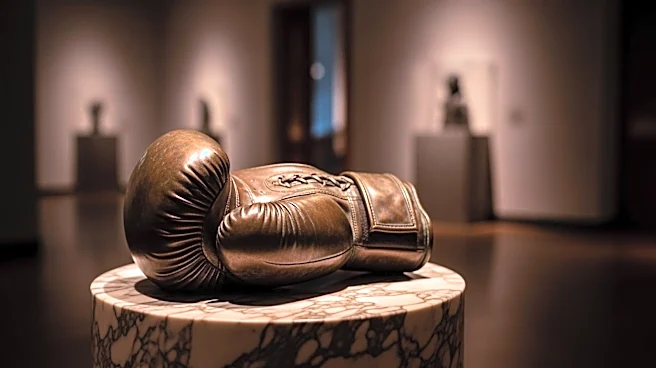
The Philadelphia Museum of Art has decided to embrace the iconic Rocky Balboa statue, a symbol of resilience and struggle, by incorporating it into a new exhibition titled 'Rising Up: Rocky and the Making
of Monuments.' This exhibition, curated by Paul Farber, explores the cultural significance of the fictional boxer and his impact on art history and Philadelphia's identity. The statue, originally left on the museum's steps after the filming of the 'Rocky' movies, has been a point of contention for decades. Despite its popularity, the museum had previously distanced itself from the statue, which is owned by the city. The exhibition traces over 2,000 years of boxing imagery, highlighting the universal themes of endurance and internal struggle that Rocky represents. The exhibition also features works by artists like Keith Haring and Andy Warhol, reflecting the global boxing craze of the 1970s.
Why It's Important?
The decision to embrace the Rocky statue marks a significant shift in the museum's approach to public monuments and popular culture. By acknowledging the statue's cultural impact, the museum is bridging the gap between high art and popular culture, recognizing the importance of public sentiment and cultural symbols. This move could influence other cultural institutions to reconsider their stance on popular culture and its place in art history. The exhibition not only celebrates a beloved fictional character but also highlights the broader themes of struggle and resilience that resonate with audiences worldwide. This could enhance the museum's appeal to a wider audience, potentially increasing visitor numbers and engagement.
What's Next?
Following the exhibition, the Rocky statue will be moved to a permanent location at the top of the museum's steps, a position it has never officially held. This relocation signifies a formal acceptance of the statue as part of the museum's narrative. Additionally, a statue of Joe Frazier, whose real-life story inspired Rocky, will replace the current statue at the bottom of the steps. This change reflects a broader recognition of the real-life figures who have contributed to the cultural landscape. The museum's decision may prompt discussions about the role of public monuments and their representation in cultural institutions.