



What's Happening?
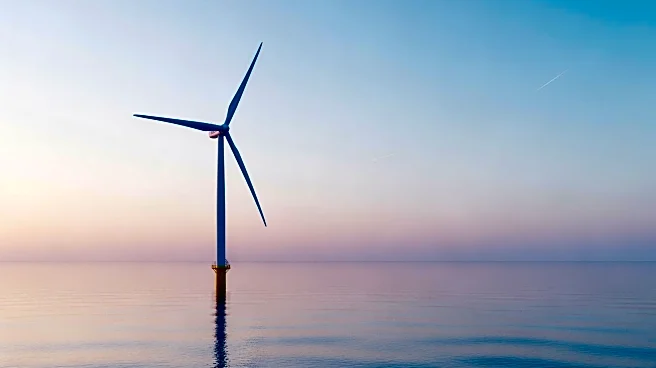
The Borkum Riffgrund 3 offshore wind farm has started delivering its first power to the German grid as of December 3. This project, developed by Ørsted in partnership with Nuveen Infrastructure, is set to become the largest offshore wind farm in Ørsted’s
German portfolio. Located 45 miles off the German coast in the North Sea, the wind farm will have a total capacity of 913 MW upon full commissioning in early 2026. The project is supported by long-term corporate power purchase agreements with major companies like Amazon, BASF, Covestro, and Google, ensuring price security for both the developer and customers. The wind farm consists of 83 turbines, each with a capacity of 11 MW, and is notable for being the first in Germany to be built without an offshore substation, using a direct connection to the DolWin epsilon offshore converter platform.
Why It's Important?
The commissioning of Borkum Riffgrund 3 is a significant step in Germany's renewable energy strategy, contributing to the EU's energy transition goals. As Germany aims to increase its offshore wind capacity to 30 GW by 2030, this project represents a critical addition to the country's renewable energy infrastructure. The involvement of major corporations through power purchase agreements highlights the growing corporate commitment to sustainable energy solutions. This development not only strengthens Germany's position in renewable energy but also supports the EU's broader climate objectives, potentially influencing energy policies and market dynamics across Europe.
What's Next?
As Borkum Riffgrund 3 moves towards full commissioning in 2026, it will join other significant projects like Gode Wind 3, enhancing Ørsted's installed offshore wind capacity in Germany to around 2.5 GW. This expansion positions Ørsted as a market leader, operating over 20% of Germany's offshore wind capacity. The successful integration of this project may encourage further investments and policy support for renewable energy in Germany and the EU. Additionally, the German government is likely to explore new policies to stimulate further development in the offshore wind sector, especially after a recent leasing round failed to attract bids.