
What's Happening?
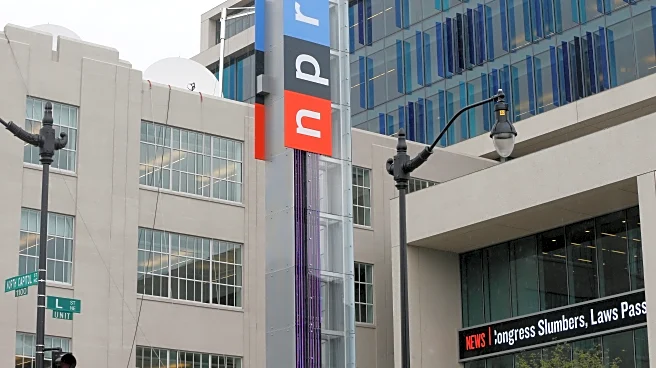
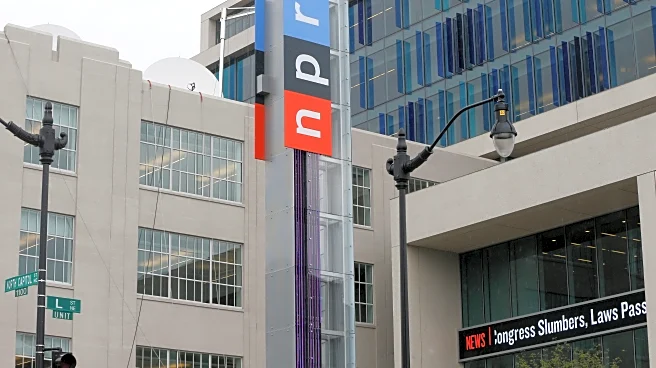
A federal judge has ruled that President Trump's executive order to defund NPR and PBS is unconstitutional, violating the First Amendment. Judge Randolph D. Moss stated that the order, which aimed to cut federal funding due to alleged media bias, unlawfully
targeted these organizations based on their speech. The ruling prevents the enforcement of the order, though the future of public broadcasting funding remains uncertain as Congress had already voted to eliminate appropriations, leading to the closure of the Corporation for Public Broadcasting.
Why It's Important?
The decision is a critical affirmation of press freedom, emphasizing that the government cannot use financial power to suppress media based on content. It highlights the judiciary's role in protecting constitutional rights against executive overreach. The ruling may influence future legal challenges involving government attempts to control media narratives. Despite the victory, the practical impact is limited by prior Congressional actions that have already defunded public broadcasting, posing ongoing challenges for NPR and PBS.
What's Next?
The Trump administration is likely to appeal the ruling, potentially extending the legal battle. Public media organizations may need to explore alternative funding strategies to sustain operations. The decision opens the door for future Congressional efforts to restore funding, though such actions would require significant political support. Public media advocates will continue to push for financial independence to ensure the continuation of unbiased journalism.