
What's Happening?
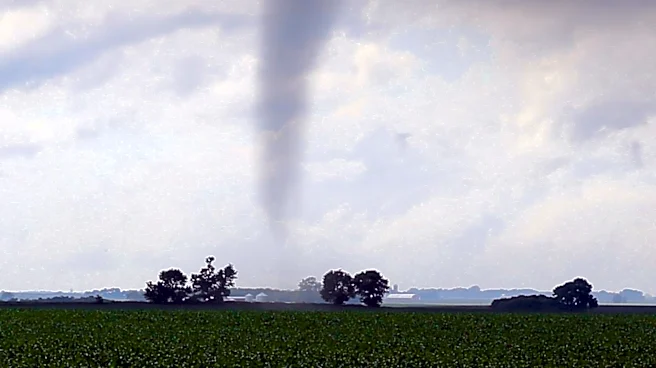
The National Weather Service Detroit/Pontiac, MI, has confirmed that two tornadoes touched down in Wayne County, Michigan, on Thursday. The first tornado, an EF-0, occurred in Lincoln Park, lasting approximately
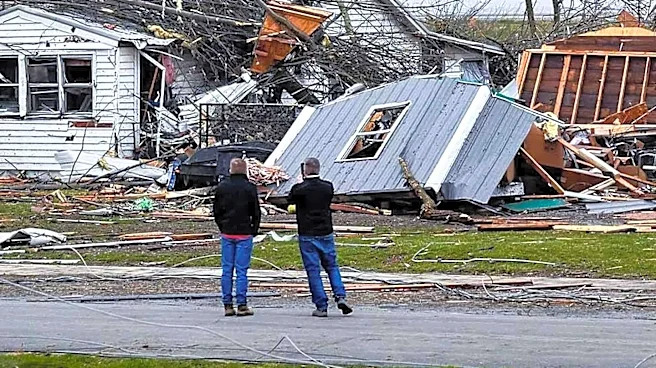
one minute with peak winds of 70 MPH. It caused snapped tree limbs, uprooted trees, and bent electrical transmission lines. The second tornado, an EF-2, impacted Metro Detroit, touching down near Hancock Road and moving southeast. This tornado, with peak winds of 115 MPH, caused significant damage to residential siding, overturned an outbuilding, damaged roofs of industrial buildings, and uprooted numerous large trees. It also detached traffic signals and caused structural damage to homes. The tornadic track continued over the Detroit River to Belle Isle, causing further tree damage before crossing into East Windsor, Ontario, Canada, where it was rated an EF-1 with peak winds of 105 MPH.
Why It's Important?
The confirmation of two tornadoes in Wayne County highlights the increasing frequency and intensity of severe weather events in urbanized areas, posing significant risks to infrastructure and public safety. The EF-2 tornado, in particular, caused substantial structural damage to industrial buildings and residential properties, leading to considerable economic losses and disruption for businesses and residents. The extension of the tornado's path across the Detroit River into Canada underscores the transboundary nature of severe weather phenomena and the need for coordinated emergency responses. This event serves as a critical reminder for local governments and communities to enhance their preparedness and mitigation strategies against tornadoes, including updating building codes and improving early warning systems, to protect lives and minimize property damage in densely populated regions.
What's Next?
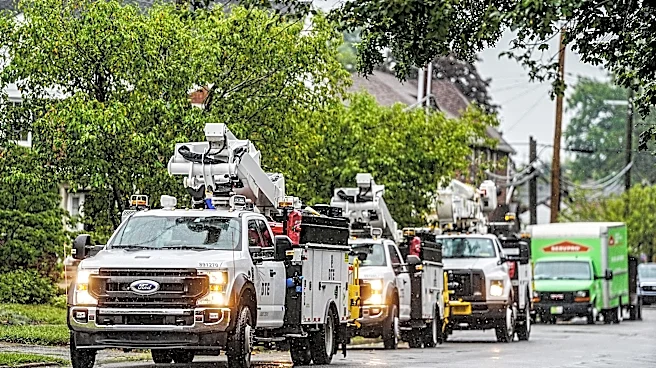
The National Weather Service in Detroit/Pontiac, MI, will continue to compile more information regarding these tornado touchdowns throughout the weekend. This ongoing assessment will likely provide a more comprehensive understanding of the tornadoes' paths, damage intensity, and overall impact. Local authorities in Wayne County and Detroit will be focused on recovery efforts, including clearing debris, restoring power to affected areas, and assessing the full extent of structural damage. Residents and businesses in the impacted zones will need to begin the process of filing insurance claims and initiating repairs. The event may also prompt discussions among local and regional planning bodies about strengthening infrastructure and emergency protocols to better withstand future severe weather occurrences, potentially leading to updated community preparedness plans.
Beyond the Headlines
This event underscores a broader trend of severe weather patterns impacting regions not traditionally considered high-risk for tornadoes, prompting a reevaluation of climate resilience strategies. The cross-border nature of the tornado, extending into Windsor, Ontario, highlights the interconnectedness of weather systems and the potential for international collaboration in disaster response and meteorological research. Beyond immediate recovery, there will likely be long-term implications for urban planning and infrastructure development, with increased emphasis on tornado-resistant construction and early warning technologies. The psychological impact on affected communities, particularly those who experienced significant property loss or disruption, will also be a critical aspect of recovery, necessitating community support and mental health resources. This incident could also influence insurance policies and risk assessments for properties in the affected areas.