
What's Happening?
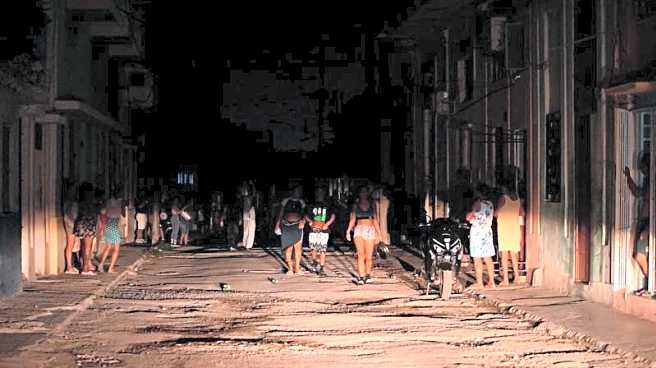
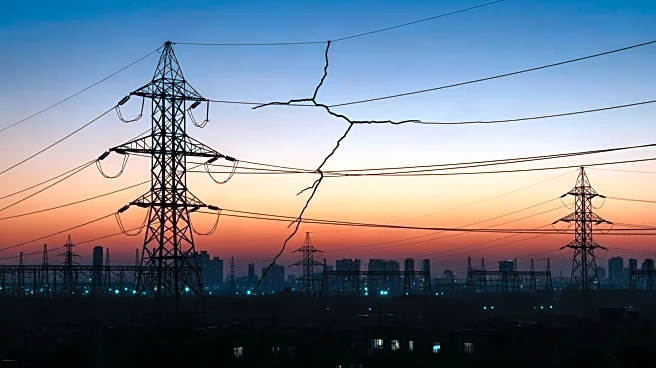
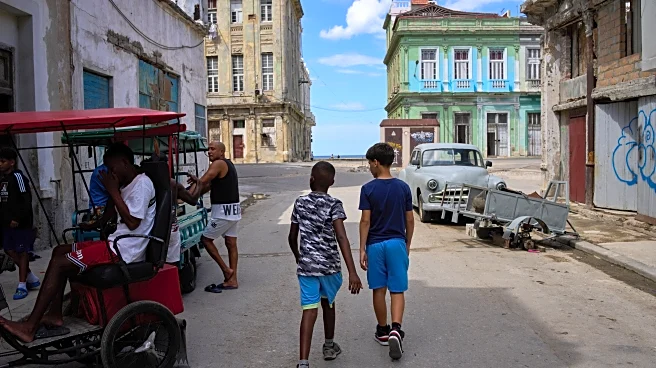
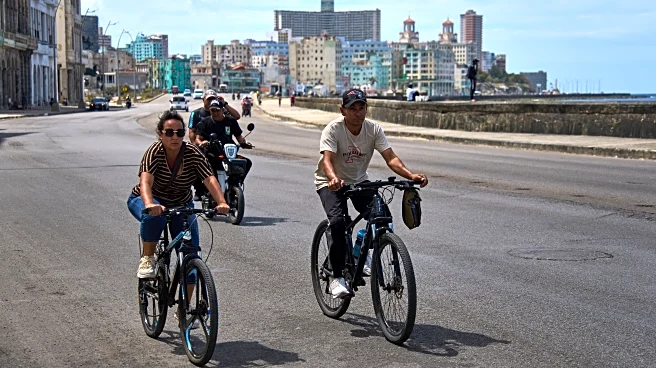
Cuba's national electric grid collapsed on March 16, leaving approximately 10 million people without power. The blackout is attributed to a U.S.-imposed oil blockade that has severely restricted fuel imports to the island. The Cuban government is investigating
the causes of the blackout, which is the latest in a series of outages. The U.S. has increased pressure on Cuba following the capture of Venezuelan President Nicolás Maduro, a key ally. President Trump has suggested that Cuba is on the verge of collapse and has expressed interest in negotiating with the Cuban government.
Why It's Important?
The power grid collapse in Cuba highlights the severe impact of the U.S. blockade on the island's infrastructure and economy. The situation has led to widespread unrest and protests, underscoring the humanitarian implications of the blockade. The crisis also raises questions about the effectiveness and ethics of using economic sanctions as a tool of foreign policy. The potential for negotiations between the U.S. and Cuba could lead to significant geopolitical shifts in the region.