



What's Happening?
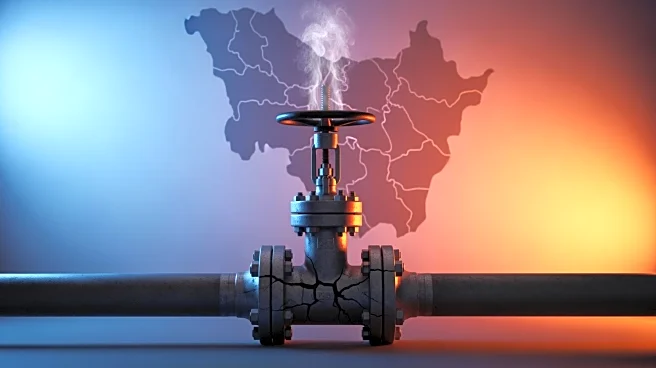
The European Commission has announced a 'Buy European' policy aimed at boosting domestic production of key net-zero technologies, including lithium-ion batteries, electrolysers, heat pumps, and photovoltaic modules. This policy is part of the Industrial
Accelerator Act (IAA) and seeks to enhance Europe's green transformation by increasing demand for low-emission technologies manufactured within the EU. However, this move has sparked concerns as it contradicts World Trade Organization (WTO) rules and deviates from the EU's traditional stance as a proponent of rules-based global trade. The Centre for European Policy (cep) has conducted a study assessing the potential and risks associated with this policy, highlighting the possibility of price increases and supply bottlenecks. The study suggests that while the policy could generate significant economic benefits, it also poses challenges such as complex regulations, skills shortages, and uneven income distribution across EU member states.
Why It's Important?
The 'Buy European' policy has significant implications for global trade dynamics, particularly affecting the United States and other trading partners. By prioritizing EU-internal manufacturing, the policy could lead to increased trade tensions and disrupt existing supply chains. For U.S. industries, this may result in reduced market access and increased competition in sectors related to green technologies. The policy also raises questions about the future of international trade agreements and the potential for retaliatory measures from affected countries. Additionally, the uneven distribution of economic benefits within the EU could lead to political challenges and affect the policy's long-term viability. As the EU moves forward with this strategy, it will need to balance its green transformation goals with the need to maintain harmonious international trade relations.
What's Next?
The EU will need to address several challenges to successfully implement the 'Buy European' policy. This includes simplifying regulations, addressing skills shortages, and developing specialized regional manufacturing clusters. The policy's impact on global trade relations will likely prompt discussions among international trade partners, including the United States, about potential responses and adjustments to trade agreements. The EU may also face internal political pressure to ensure that the economic benefits of the policy are equitably distributed among member states. As the policy unfolds, stakeholders will closely monitor its effects on both the EU's green transformation goals and its international trade relationships.
Beyond the Headlines
The 'Buy European' policy highlights a broader trend of protectionism in global trade, as countries seek to bolster domestic industries in response to economic and environmental challenges. This shift raises ethical and legal questions about the balance between national interests and global cooperation. The policy also underscores the growing importance of green technologies in shaping economic strategies and international relations. As countries navigate these complex dynamics, the role of international organizations like the WTO in mediating trade disputes and promoting fair trade practices will become increasingly critical.