








What's Happening?
The European Union has introduced new regulations aimed at addressing its significant trade imbalance with China. These measures include a new customs duty on small parcels and revised rules on steel imports. The EU's trade deficit with China has been
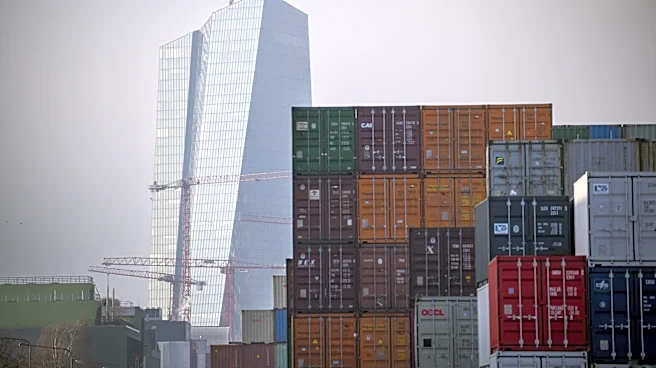
growing, reaching approximately 360 billion euros in 2025. The new regulations are designed to protect European industries, particularly the steel sector, from the effects of global overcapacity and unfair competition. The EU has removed a customs duty exemption for parcels valued under 150 euros, a move that targets the dominance of Chinese e-commerce giants like Temu and Shien. Additionally, the EU has set tariff-free quotas for steel imports and imposed a 50% duty on imports exceeding these quotas. These actions are part of a broader strategy to ensure fair competition and protect European jobs.
Why It's Important?
The EU's new trade regulations are significant as they represent a shift in the bloc's approach to managing its economic relationship with China. By imposing these measures, the EU aims to level the playing field for its industries, which have been struggling against the influx of cheaper Chinese goods. The steel industry, in particular, has been under pressure due to China's subsidized production, which has led to a decline in European steel output. The new regulations could help stabilize the industry and protect jobs. Moreover, the removal of the customs duty exemption for small parcels is expected to reduce the volume of low-value imports, which have been a source of unfair competition for European retailers. These measures could also inspire other countries to adopt similar strategies, potentially leading to a more balanced global trade environment.
What's Next?
The EU has set an October deadline for achieving meaningful results in rebalancing trade with China. This timeline suggests that further negotiations and adjustments to the regulations may occur in the coming months. The EU's actions could prompt reactions from China, which may seek to counter these measures through diplomatic or economic means. Additionally, the new regulations could lead to increased scrutiny of trade practices and further discussions on global trade policies. The EU's approach may also influence other regions to reconsider their trade relationships with China, potentially leading to a broader realignment of global trade dynamics.
Beyond the Headlines
The EU's new trade measures highlight the complex interplay between economic policy and international relations. The regulations are not only about protecting European industries but also about asserting the EU's position in the global trade landscape. The measures could have long-term implications for EU-China relations, as they may lead to increased tensions or, conversely, encourage more balanced trade practices. The focus on steel and e-commerce also underscores the importance of these sectors in the EU's economic strategy. As the EU navigates these challenges, it will need to balance its economic interests with its diplomatic relationships, both within Europe and globally.