


What's Happening?
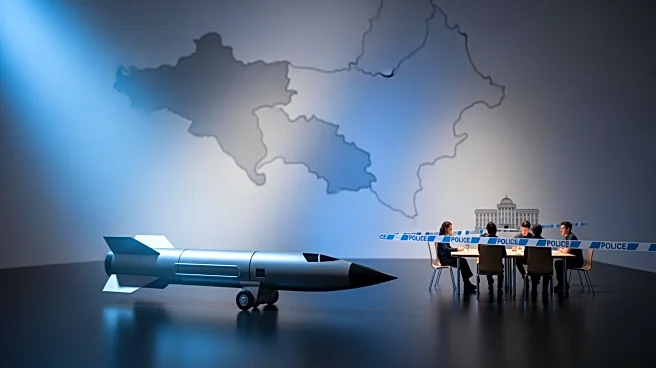
Russia has launched its hypersonic ballistic 'Oreshnik' missile for the second time, targeting western Ukraine near the Polish border. This missile, capable of traveling at speeds up to Mach 10.5, can theoretically carry nuclear warheads, although it reportedly
used conventional warheads in this instance. The launch is seen as a strategic message to the West, showcasing Russia's military capabilities amid ongoing geopolitical tensions. The attack resulted in significant infrastructure damage in Ukraine, leaving hundreds of thousands without electricity. The missile's deployment follows heightened tensions between Russia and the West, including U.S. actions against Venezuela, a Russian ally.
Why It's Important?
The missile launch underscores the escalating tensions between Russia and NATO countries, particularly as it occurred near a NATO member's border. This action serves as a reminder of Russia's strategic capabilities and its willingness to use advanced military technology to assert its geopolitical stance. The potential for these missiles to carry nuclear warheads raises concerns about miscalculations that could lead to broader conflict. The situation is further complicated by ongoing diplomatic strains, including U.S. sanctions on Russia and European military support for Ukraine, which Russia views as provocative.
What's Next?
The international community is likely to respond with increased diplomatic efforts to de-escalate tensions. NATO may consider bolstering its defensive posture in Eastern Europe, while the U.S. and its allies could impose further sanctions on Russia. The situation may also influence ongoing discussions about military support for Ukraine and the strategic balance in the region. Russia's actions could prompt a reassessment of defense strategies among NATO members, particularly regarding missile defense systems.
![Daily Slop: 12 Feb 26 – New Commanders OC David Blough: “How do we get Terry [McLaurin] 10 targets a game?“](https://glance-mob.glance-cdn.com/public/cardpress/binge-magazine-card-generation/spaces/US/en/sb-nation/images/ppid_2cf3d240-image-177091266842313096.webp)