





What's Happening?
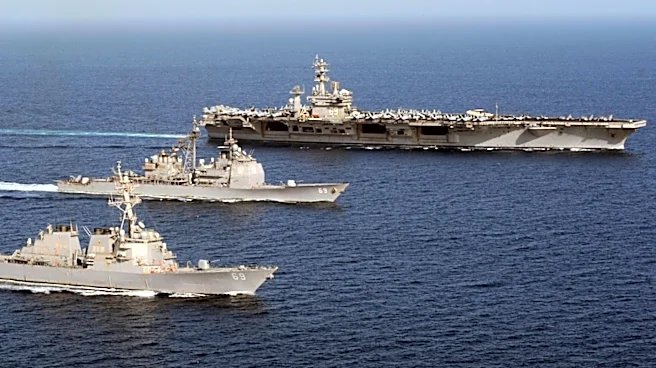
The USS Theodore Roosevelt (CVN-71), a nuclear-powered aircraft carrier of the U.S. Navy, has been reported operating in the South China Sea. This deployment follows its participation in the multinational Keen Sword 27 exercise alongside Japan and other
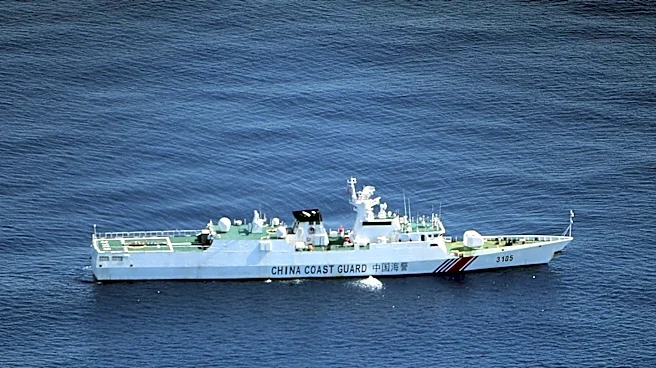
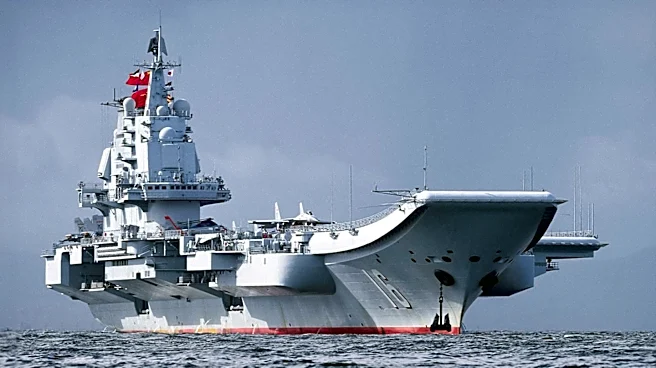
partner countries. A November 2 USNI fleet report confirmed its presence, with tracking data suggesting the carrier moved south of the Spratly Islands, based on the flight path of an embarked MH-60S Sea Hawk helicopter. This U.S. naval activity coincides with increased operations by China's aircraft carrier fleet in the western Pacific. China's Fujian (CV-18) was observed southeast of Hainan Island, while the Liaoning (CV-16) was identified in the Philippine Sea. Additionally, the Shandong (CV-17) reportedly departed dry dock after nine months of maintenance and appears to be undergoing sea trials, indicating a potential return to service. These simultaneous movements highlight a concentration of carrier activity in strategically important waters.
Why It's Important?
The presence of the USS Theodore Roosevelt in the South China Sea, amidst heightened Chinese naval operations, underscores the ongoing strategic competition between the United States and China in the Indo-Pacific region. The South China Sea is a critical waterway for global trade and is subject to extensive territorial disputes, making any significant military presence a matter of international interest. The deployment of U.S. naval assets in these waters serves to assert freedom of navigation and reinforce alliances with regional partners. Concurrently, China's expanding carrier capabilities, particularly with the Fujian's advanced electromagnetic aircraft launch systems (EMALS), signal its growing naval power projection. This dynamic interplay of naval forces can influence regional security perceptions, potentially impacting diplomatic relations and military postures of various nations with interests in the area. The increased activity by both powers emphasizes the strategic importance of maritime control and influence in the region.
What's Next?
The continued presence of U.S. naval forces in the South China Sea is likely to remain a consistent feature of U.S. Indo-Pacific strategy, aimed at maintaining regional stability and countering perceived challenges to international maritime law. China is expected to continue its naval modernization and expansion, with its aircraft carriers conducting more frequent and complex operations to assert its territorial claims and project power. Regional allies and partners of the U.S., such as Japan and the Philippines, will likely continue to engage in joint exercises and diplomatic efforts to manage tensions. The operational status of China's Shandong carrier, once fully returned to service, will further increase the People's Liberation Army Navy's (PLAN) operational capacity, potentially leading to more complex exercises and deployments. Future interactions between U.S. and Chinese naval assets in these contested waters will be closely monitored for any escalations or shifts in operational patterns.
Beyond the Headlines
The intensified naval activity in the South China Sea reflects a broader geopolitical struggle for influence and adherence to international norms. Beyond the immediate military posturing, the presence of these powerful naval assets has significant implications for global trade routes, energy security, and the balance of power in Asia. The U.S. emphasis on freedom of navigation challenges China's expansive territorial claims, which are not recognized by international law. The development and deployment of advanced naval technology, such as China's EMALS-equipped Fujian, also signal a long-term shift in naval capabilities that could reshape future maritime warfare doctrines. This ongoing competition extends beyond military might, influencing economic partnerships, technological development, and diplomatic alignments across the Indo-Pacific, with potential long-term consequences for global stability and the international rules-based order.