


What's Happening?
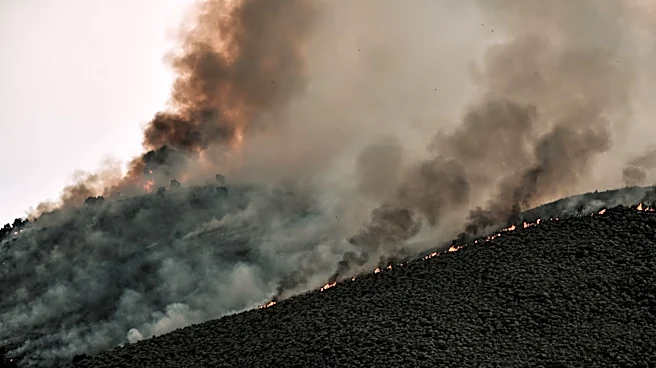
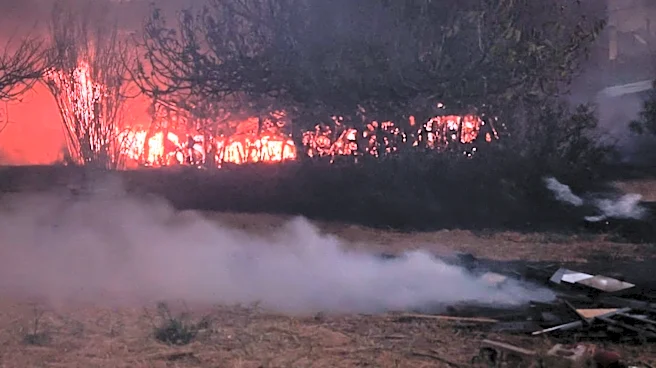
The Rio Blanco Fire in Archuleta County, Colorado, has grown to approximately 1,300 acres, prompting mandatory evacuations for residents along Lower Blanco Road (CR 335). The fire, which started on July 28, continues to spread north and west, posing a significant
threat to residential areas. Local authorities, including Sheriff Mike Le Roux and County Commissioner Warren Brown, are coordinating efforts to ensure public safety. The fire has led to the displacement of numerous residents, with emergency services working to manage the situation. The community meeting held to update residents highlighted the challenges faced by first responders and the strain on local resources.
Why It's Important?
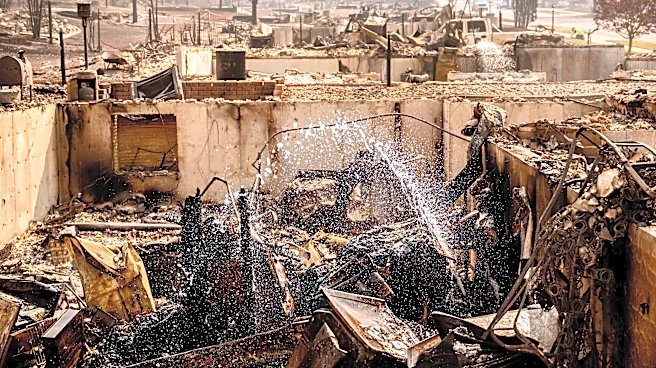
The Rio Blanco Fire underscores the increasing frequency and intensity of wildfires in the U.S., driven by factors such as climate change and land management practices. It highlights the vulnerability of communities located in the Wildland-Urban Interface, where residential areas meet undeveloped wildlands. The fire's impact on local residents, infrastructure, and emergency services illustrates the broader societal and economic challenges posed by wildfires. It also emphasizes the need for effective evacuation plans and community preparedness to mitigate risks and ensure public safety.
What's Next?
Authorities are closely monitoring the fire's progression and weather conditions, which will influence firefighting strategies. Efforts to contain the fire will continue, with additional resources potentially being deployed if conditions worsen. Residents in pre-evacuation zones are advised to remain vigilant and prepared to evacuate if necessary. The situation may prompt discussions on long-term fire management strategies and community resilience planning to better protect vulnerable areas in the future.
Beyond the Headlines
The fire raises questions about land use policies and the balance between development and environmental conservation. It also highlights the psychological and social impacts of natural disasters on affected communities, including stress, displacement, and economic loss. As wildfires become more common, there may be increased advocacy for policy changes and investment in fire prevention and mitigation measures.