




What's Happening?
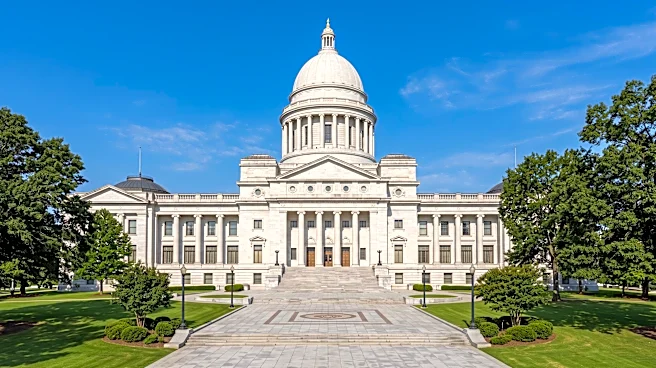
Arkansas Governor Sarah Huckabee Sanders announced the approval of $8.2 million in financial assistance for water and wastewater projects across the state. This funding addresses the significant water infrastructure needs in Arkansas, which are estimated
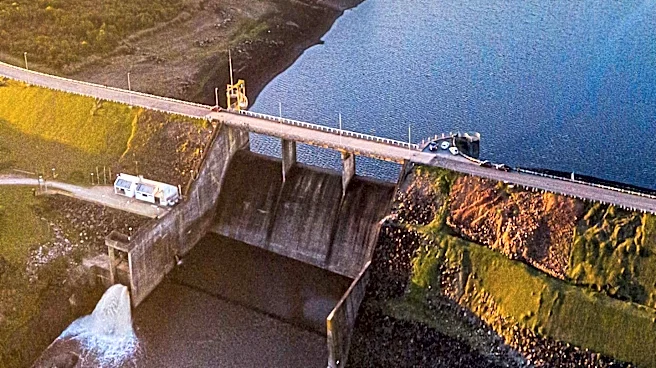
to exceed $20 billion over the next two decades due to aging systems and insufficient capacity. Three specific projects received approval: a $100,000 emergency loan from the Water Development Fund for the City of Black Rock in Lawrence County to improve a sewer lift station, serving 590 customers; another $100,000 emergency loan for the City of Stamps in Lafayette County for wastewater treatment plant repair, serving 1,258 customers; and an $8 million loan from the General Obligation Bond Program for the White River Regional Irrigation District in Prairie County. The latter will support the Grand Prairie Demonstration Project, aiming to provide surface water irrigation to over 362,000 acres in critical groundwater areas. Governor Sanders emphasized that reliable water infrastructure is crucial for Arkansas's growth, supporting farms, businesses, families, and communities.
Why It's Important?
This investment is critical for Arkansas's public health, economic development, and environmental sustainability. Addressing the state's $20 billion water infrastructure deficit is essential to prevent potential health crises from failing wastewater systems and to ensure access to clean drinking water for residents. The funding for irrigation infrastructure, particularly the Grand Prairie Demonstration Project, is vital for the agricultural sector, which is a cornerstone of Arkansas's economy. By providing surface water irrigation, the project will help conserve critical groundwater resources, ensuring long-term sustainability for farming communities. Furthermore, these projects create jobs and stimulate local economies through construction and maintenance activities. The initiative underscores the state's commitment to modernizing essential services, which is fundamental for attracting new businesses and retaining existing ones, thereby contributing to overall economic stability and growth.
What's Next?
The approved projects are expected to move forward with implementation, with the City of Black Rock and the City of Stamps utilizing their emergency loans for immediate infrastructure improvements. The White River Regional Irrigation District will continue construction on the Grand Prairie Demonstration Project, which will have long-term benefits for agricultural irrigation and groundwater conservation. The state will likely continue to assess and prioritize additional water infrastructure needs, given the estimated $20 billion deficit over the next two decades. This initial $8.2 million investment may serve as a precedent for future funding allocations, potentially leading to more comprehensive state-level initiatives or partnerships with federal programs to tackle the broader infrastructure challenges. Monitoring the progress and impact of these projects will be crucial for evaluating the effectiveness of the current funding strategy.
Beyond the Headlines
Beyond the immediate benefits of improved water and wastewater services, this investment highlights a broader national challenge: the aging infrastructure across the United States. Many states face similar, if not greater, needs for modernizing their essential services. Arkansas's proactive approach, as demonstrated by Governor Sanders' announcement, could serve as a model for other states grappling with infrastructure decay. The focus on both urban wastewater systems and rural agricultural irrigation also reflects a balanced understanding of the diverse water needs within a state. This initiative implicitly acknowledges the interconnectedness of public health, economic prosperity, and environmental stewardship, positioning water infrastructure as a foundational element for sustainable development. The long-term success of such projects will depend not only on initial funding but also on ongoing maintenance, technological upgrades, and adaptive management strategies to address future challenges like climate change and population growth.