
What's Happening?
Despite President Trump's public statements suggesting a reduction in U.S. spending on the Ukraine conflict, the United States continues to provide substantial military and operational support to Ukraine.
President Trump has frequently claimed that the U.S. is no longer funding Ukraine and that Europe is bearing the financial burden. However, existing contracts from the previous administration, new congressional approvals, and ongoing State Department initiatives ensure a continuous flow of aid. Specifically, approximately $13 billion in outstanding Ukraine Security Assistance Initiative (USAI) contracts, signed under the Biden administration, are still being implemented, procuring weapons like NASAMs, Patriot missiles, counter-drone systems, and artillery for Ukraine through 2028. Additionally, Congress has approved about $800 million in USAI funding in the 2026 and 2027 National Defense Authorization Acts (NDAAs), and the State Department has approved $3 billion in new arms sales to Ukraine in 2025 and 2026, partially funded by foreign military financing. Beyond direct weapon transfers, the U.S. is also providing increasing amounts of intelligence, logistics, and operational support, including real-time targeting information and maintenance assistance.
Why It's Important?
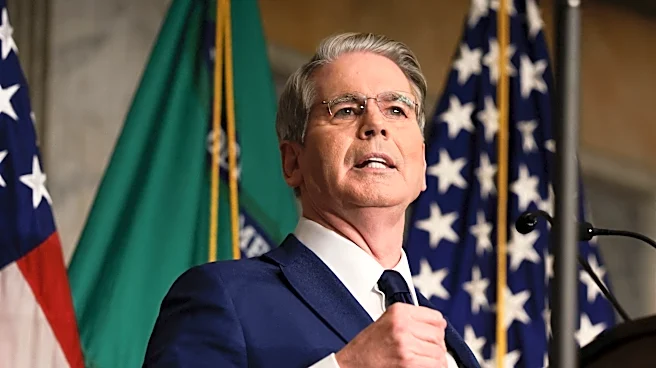
The continued, albeit less visible, U.S. support for Ukraine carries significant implications for U.S. national security, foreign policy, and economic stability. The ongoing delivery of weapons through existing contracts and new funding strains U.S. defense industrial capacity, potentially diverting resources from other critical U.S. defense needs. This sustained involvement deepens the U.S. role in the conflict, making it an all-but-direct combatant, which increases the risk of miscalculation and direct confrontation with Russia, especially given the current state of U.S. military readiness. Furthermore, U.S. intelligence support, particularly in assisting Ukraine with strikes on energy targets inside Russia, has economic consequences for Americans by contributing to higher global oil prices, as acknowledged by Secretary of the Treasury Scott Bessent. The provision of intelligence and operational support, which is largely classified and not itemized, represents a substantial financial commitment, estimated at roughly $20 billion per year, impacting U.S. taxpayers without clear public accountability.
What's Next?
The current trajectory suggests that U.S. military and operational support to Ukraine will persist, at least through the fulfillment of existing contracts and congressionally approved funding. The Trump administration could, in theory, attempt to recoup funds from outstanding USAI contracts and reallocate them, but it has not done so. Future congressional bills are also expected to include additional USAI funding. The increasing reliance on intelligence, logistics, and operational support means that the U.S. involvement will likely continue to be less transparent, with much of the cost embedded in classified national security budgets. This ongoing support will likely continue to draw reactions from Russia, potentially leading to further retaliatory measures, such as increased Russian assistance to countries like Iran. The long-term implications for U.S. foreign policy and its relationship with both Ukraine and Russia will depend on future administrative decisions and geopolitical developments.
Beyond the Headlines
The sustained, yet often understated, U.S. involvement in Ukraine raises profound questions about the transparency and accountability of foreign policy decisions, particularly when public rhetoric diverges from actual policy implementation. The shift from direct weapon transfers to intelligence and operational support highlights a more subtle, yet equally impactful, form of engagement that carries significant risks. This approach allows for continued influence in the conflict while potentially sidestepping direct public scrutiny and debate over the extent of U.S. commitment. The ethical implications of providing real-time targeting information, which can lead to strikes on critical infrastructure and impact global markets, also warrant deeper consideration. This situation underscores a broader trend in modern warfare where technological and intelligence capabilities play an increasingly central, and often covert, role, blurring the lines of direct combatant status and complicating the assessment of national security risks and economic burdens.