
What's Happening?
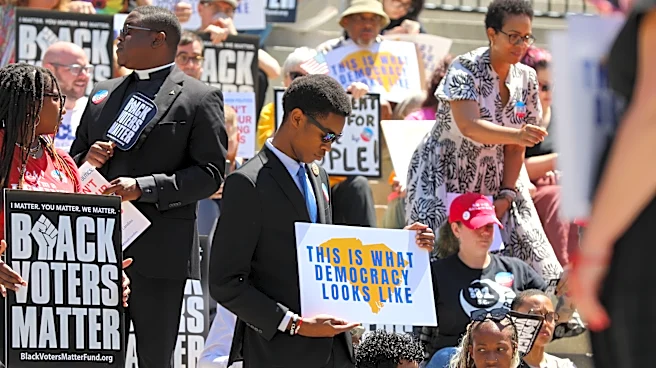
In Montgomery, Alabama, activists retraced the steps of the historic 1965 voting rights march, highlighting ongoing challenges to voting rights. The event, attended by individuals like Keith Odom, a union
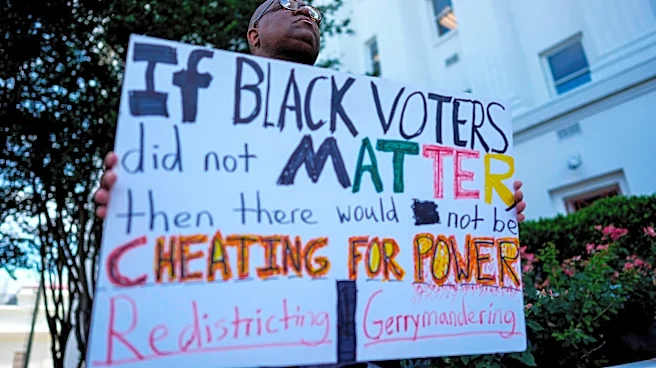
man from South Carolina, was not just a commemoration but a call to action following a recent U.S. Supreme Court decision. This ruling struck down a majority Black congressional district in Louisiana, arguing that considering race in political line drawing is discriminatory. This decision has prompted states, including Alabama, to redraw districts, potentially diluting Black voting power. The rally, named 'All Roads Lead to the South,' was organized as a response to this ruling, aiming to renew the fight for voting rights that were initially secured by the 1965 Voting Rights Act.
Why It's Important?
The Supreme Court's decision to strike down race-conscious districting has significant implications for minority representation in the U.S. political system. By potentially reducing the ability of Black voters to elect candidates of their choice, the ruling could shift political power dynamics, particularly in Southern states. This has raised concerns among civil rights activists and political leaders who argue that such changes could reverse decades of progress in voting rights. The rally in Montgomery underscores the ongoing struggle for equitable representation and the importance of maintaining vigilance in protecting voting rights, especially for marginalized communities.
What's Next?
The rally in Montgomery is likely to be the first of many actions aimed at challenging the Supreme Court's decision and advocating for fairer districting practices. Civil rights groups and political leaders may push for legislative changes at both state and federal levels to counteract the effects of the ruling. Additionally, there could be increased efforts to mobilize voters and raise awareness about the importance of voting rights, particularly in the lead-up to future elections. The outcome of these efforts could significantly impact the political landscape in the U.S., especially in regions with large minority populations.