




What's Happening?
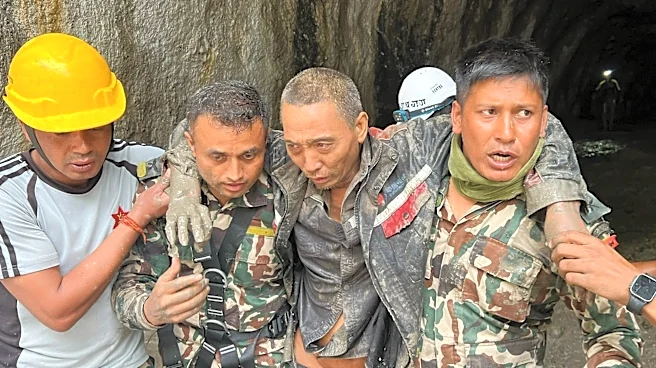
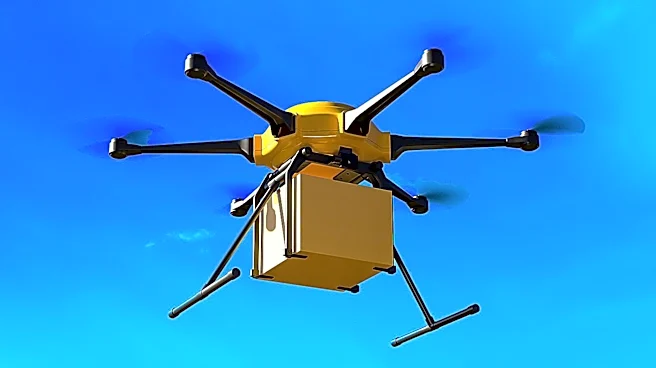
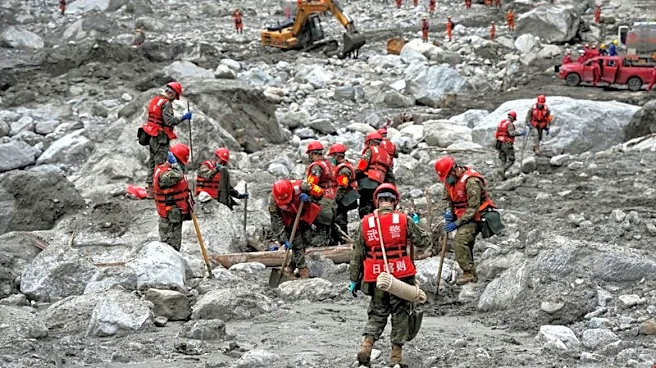
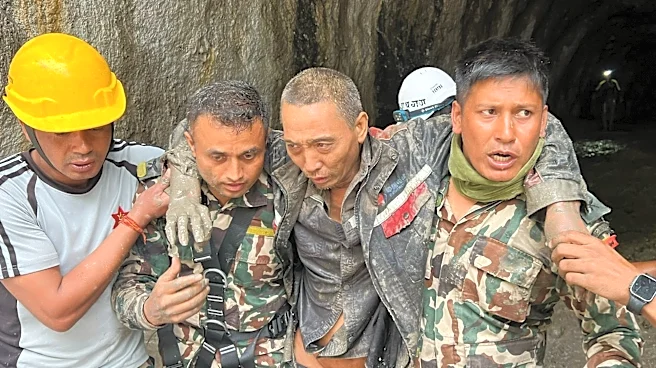
The World Food Programme (WFP) has initiated the use of cargo drones, or Unmanned Aircraft Systems (UAS), to deliver food assistance to communities in Rasuwa, northern Nepal. These communities have been isolated due to recent devastating flash floods,
which damaged roads and infrastructure. This marks the first time WFP has utilized cargo drones in an emergency operation in Nepal. The deployment aims to overcome difficult terrain and last-mile access constraints, complementing traditional road and helicopter deliveries. This innovation transforms a vision, previously presented at the Lake Victoria Drone Challenge in 2019, into a reality, demonstrating how technology can bridge the gap between those in need and critical aid.
Why It's Important?
This deployment signifies a major advancement in humanitarian logistics and disaster response. The use of cargo drones can drastically reduce delivery times to isolated areas, potentially saving lives and ensuring timely access to essential supplies during crises. In past emergencies, such as the 2015 Nepal earthquake, WFP relied on methods like yaks, mules, and porters, which were significantly slower. The current drone operation can cover the 'last mile' in minutes, highlighting the efficiency gains. This technological integration also sets a precedent for future humanitarian efforts globally, offering a blueprint for how organizations can leverage advanced solutions to overcome geographical and infrastructural barriers in disaster-stricken regions. It underscores the critical role of innovation in humanitarian action, focusing on ensuring that natural disasters do not prevent aid from reaching vulnerable populations.
What's Next?
The success of this drone operation in Nepal could lead to its broader adoption in other regions facing similar logistical challenges during humanitarian crises. WFP and other aid organizations will likely evaluate the effectiveness, cost-efficiency, and scalability of this approach. Further development and integration of UAS technology in humanitarian aid are anticipated, potentially leading to more sophisticated drone capabilities for various types of relief efforts. This initiative may also spur increased investment in and research into humanitarian technology, fostering collaborations between tech developers and aid agencies to create more resilient and responsive disaster relief systems worldwide. The experience gained in Nepal will inform future strategies for rapid and efficient aid delivery.
Beyond the Headlines
The deployment of cargo drones in Nepal highlights a broader trend of integrating advanced technology into humanitarian aid, moving beyond traditional methods to address complex challenges. This shift raises important considerations regarding the ethical use of technology in sensitive environments, data privacy, and the need for digital literacy among local populations. While drones offer unprecedented efficiency, their operation requires careful planning to ensure community acceptance, safety, and environmental impact. Furthermore, this innovation could stimulate local economies by creating new job opportunities in drone operation, maintenance, and related support services. It also underscores the importance of international cooperation in developing and deploying such technologies, ensuring that the benefits are accessible to all nations in need, thereby fostering a more equitable and technologically empowered global humanitarian response system.