





What's Happening?
Recent studies have shown that artificial intelligence (AI) systems are surpassing emergency room physicians and radiologists in diagnosing diseases and detecting cancers. A study published in Science revealed that an AI reasoning model outperformed two
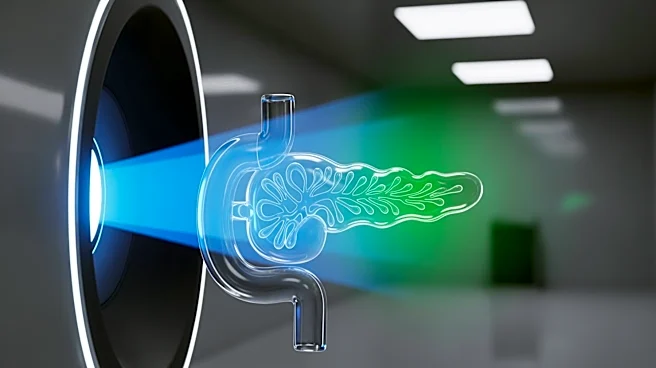
experienced emergency medicine doctors by analyzing electronic medical records. Another study in Gut demonstrated that an AI model could detect pancreatic cancers on routine CT scans up to three years before clinical diagnosis, outperforming radiologists. These advancements highlight the potential of AI to revolutionize healthcare by enabling earlier and more accurate diagnoses. However, concerns remain about overreliance on AI, as algorithms can produce false positives, leading to unnecessary testing and anxiety. The specificity of AI in detecting pancreatic cancer was 81%, meaning nearly 1 in 5 patients could receive a false positive result.
Why It's Important?
The integration of AI in healthcare could significantly improve patient outcomes by facilitating earlier detection and treatment of diseases like pancreatic cancer, which currently has a low survival rate due to late diagnosis. However, the reliance on AI also poses risks, such as the potential for false positives and the exacerbation of healthcare disparities if AI tools are not validated across diverse populations. Physicians play a crucial role in interpreting AI outputs and ensuring that diagnostic decisions are tailored to individual patients. The human element in medicine, including the ability to connect with patients and consider their unique circumstances, remains irreplaceable despite technological advancements.
What's Next?
As AI continues to advance, its role in healthcare is expected to grow, potentially serving as a second opinion in clinical settings. However, further research and controlled studies are necessary to validate AI tools across different patient demographics and ensure their safe integration into routine clinical practice. The medical community must balance the benefits of AI with the need for human oversight to prevent errors and maintain patient trust.
Beyond the Headlines
The ethical implications of AI in healthcare include the need to address biases in AI algorithms and ensure equitable access to AI-driven diagnostics. The potential for AI to deepen healthcare disparities if not properly validated across diverse populations is a significant concern. Additionally, the role of physicians in maintaining the human touch in patient care is crucial, as AI cannot replicate the empathy and nuanced understanding that doctors provide.