






What's Happening?
The Corn Belt Ports Rural Maritime & Logistics Training & Education Consortium, led by Western Illinois University (WIU), has been designated as a 2026 Center of Excellence for Domestic Maritime Workforce Training and Education by the U.S. Maritime Administration
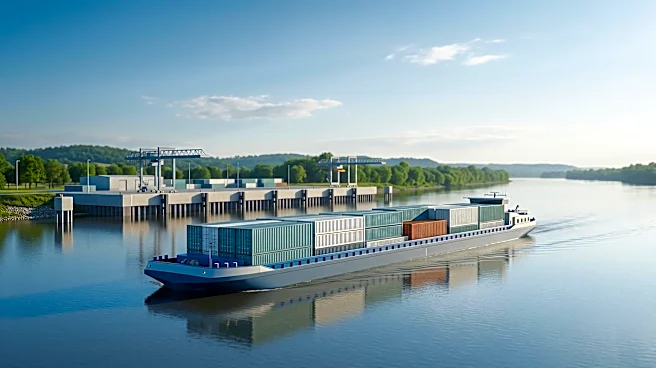
(MARAD). This recognition highlights the consortium's efforts to prepare workers for careers in the national supply chain, encompassing afloat, ashore, and logistics roles. The consortium, a collaborative initiative between WIU and Corn Belt Ports, involves partners across Iowa, Illinois, Missouri, and Wisconsin. Its focus is on river ports and terminals, inland waterways, multimodal freight, logistics, and maritime-adjacent workforce development. According to MARAD Administrator Stephen M. Carmel, these Centers of Excellence are crucial for training the next generation of maritime workers and enhancing shipbuilding capabilities. The designation also emphasizes the consortium's support for the Upper Mississippi River and Illinois Waterway lock-and-dam corridors, which are vital components of the nation's freight system.
Why It's Important?
This designation is significant for bolstering the U.S. national supply chain and regional economies, particularly in the Midwest. By formalizing long-term collaboration among educational institutions, industry leaders, and public partners, the consortium creates educational pathways that address critical workforce needs. This ensures a steady talent pipeline for shipyards, terminals, and carriers, which are essential for moving agricultural and industrial commodities. The Upper Mississippi River and Illinois Waterway are critical freight corridors, and a skilled workforce is necessary to maintain their efficiency and global competitiveness. Companies like ADM/ARTCo and organizations such as GROWMARK Inc., the Illinois Soybean Association (ISA), and the Illinois Corn Marketing Board/Illinois Corn Growers Association rely on this workforce to keep agricultural products moving safely and efficiently to global markets. The initiative strengthens rural communities by providing training and skills that support the future of agriculture and logistics.
What's Next?
The Corn Belt Ports Consortium will continue to leverage its Center of Excellence designation to enhance sector collaboration, expand stackable credentials, and advance evidence-based strategies for maritime and logistics careers. This will involve further integrating community colleges, universities, and industry partners to develop robust educational programs. The focus will remain on preparing students for meaningful careers while meeting the ongoing workforce demands of the inland maritime and logistics industries. The consortium's efforts are expected to strengthen the talent pipeline for the Upper Mississippi River and Illinois Waterway, ensuring these critical corridors remain efficient for commodity flows for decades to come. Stakeholders, including agricultural associations and logistics companies, will likely continue to support and benefit from the consortium's initiatives, contributing to the long-term stability and competitiveness of the region's supply chain.
Beyond the Headlines
The MARAD Center of Excellence designation for the Corn Belt Ports Consortium underscores a broader national strategy to invest in domestic maritime workforce development and infrastructure. This initiative highlights the often-overlooked importance of inland waterways and river ports in the overall U.S. supply chain, which are crucial for the movement of agricultural products and other goods. The collaboration between educational institutions and industry reflects a proactive approach to addressing skill gaps and ensuring economic resilience in key sectors. Ethically, it emphasizes the responsibility of educational bodies to align curricula with real-world industry needs, fostering a skilled workforce that can adapt to evolving demands. Culturally, it reinforces the value of vocational training and regional partnerships in supporting national economic interests and maintaining global competitiveness, particularly for the agricultural heartland of the U.S.