
What's Happening?
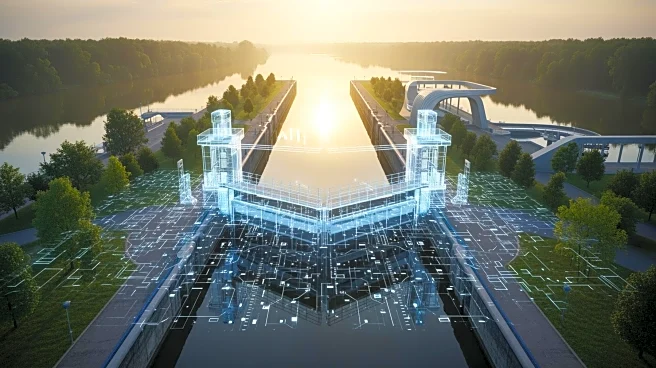
The Environment Agency has embarked on a £2 million renovation project for the Bedford Lock on the River Great Ouse, employing new technologies including Artificial Intelligence (AI) for the first time.
The project, which began in October, is set to conclude by March 2026. Project manager Steven Wilby highlighted the use of a high-resolution underwater camera to assess the lock's condition, followed by the creation of 3D models to guide the renovation process. This innovative approach aims to address structural issues caused by tree root damage and improve the lock's functionality. The lock, originally built in 1868 and last refurbished in the 1950s, is crucial for navigation along the Great Ouse. The renovation includes fitting new doors and refurbishing the guillotine gate, with the work scheduled to be completed by Good Friday.
Why It's Important?
The integration of AI and advanced imaging technologies in infrastructure projects like the Bedford Lock renovation represents a significant step forward in engineering and maintenance practices. This approach not only enhances the accuracy and efficiency of current projects but also sets a precedent for future renovations, potentially reducing costs and improving safety. The successful application of these technologies could lead to broader adoption across various infrastructure projects, benefiting public works and environmental management. The project underscores the Environment Agency's commitment to innovation and sustainability, which could influence similar agencies and contractors to adopt cutting-edge technologies in their operations.
What's Next?
As the Bedford Lock renovation progresses, the Environment Agency will likely evaluate the effectiveness of the technologies used, potentially refining their application for future projects. The success of this project could prompt further investment in AI and imaging technologies for infrastructure maintenance across the UK. Additionally, the agency may explore partnerships with tech companies to develop more advanced tools, enhancing their ability to manage and preserve critical infrastructure. Stakeholders, including local communities and environmental groups, will be keenly observing the project's outcomes, which could influence public policy and funding for similar initiatives.