



What's Happening?
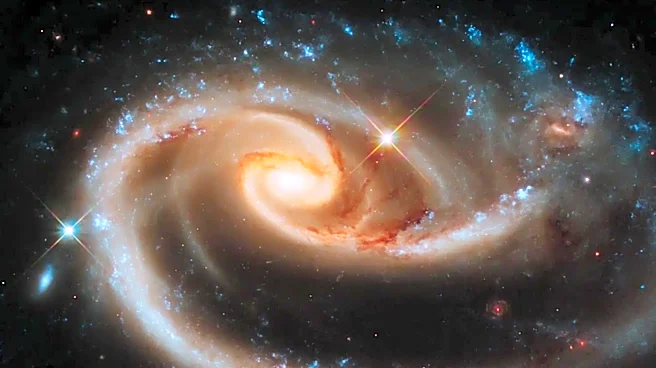
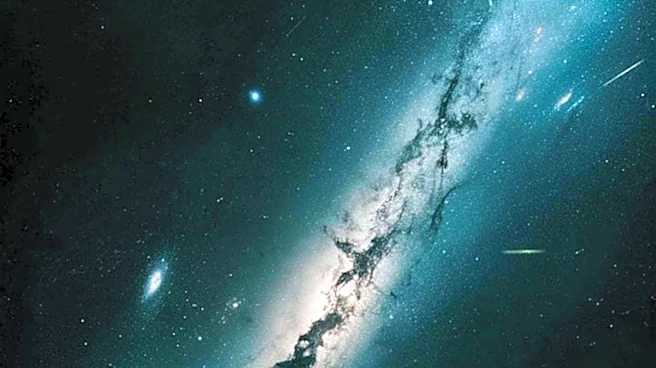
Recent simulation research indicates that the Milky Way galaxy may have gradually flipped onto its side over billions of years. This reorientation is believed to have occurred within its vast halo of dark matter following ancient collisions with smaller
galaxies. This theory adds to the growing body of evidence suggesting that the Milky Way has experienced significant upheaval throughout its 13.6-billion-year lifespan. The research highlights the dynamic and turbulent nature of our galaxy, challenging the perception of it as a stable and orderly disk. This new understanding could help explain some of the galaxy's more puzzling characteristics.
Why It's Important?
The discovery of the Milky Way's potential historical flip has significant implications for our understanding of galactic evolution and the role of dark matter. It challenges existing models of galaxy formation and suggests that galaxies may undergo more dynamic changes than previously thought. This could lead to a reevaluation of how galaxies interact with dark matter and the impact of such interactions on their structure and behavior. The findings may also influence future research in astrophysics, prompting scientists to explore similar phenomena in other galaxies and refine models of galactic dynamics.