
What's Happening?
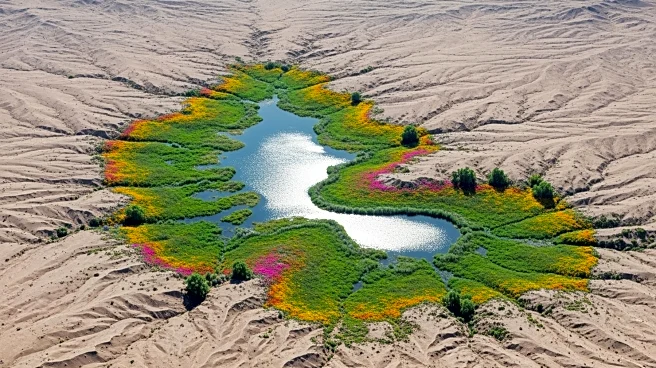
In March 2025, a record-breaking flood transformed the typically arid desert surrounding Cooper Creek in Australia's Lake Eyre Basin into a vibrant green corridor. This transformation was captured by NASA's
Earth-observing satellites, which documented the rapid ecological response to the intense rainfall. The floodwaters, which resulted from more than a year's worth of rain falling in just one week, inundated towns and grazing lands, breaking river records and isolating regions. The event provided scientists with a unique opportunity to study how rare flood pulses can awaken dormant ecosystems. The Lake Eyre Basin, one of the world's few major internally-draining river systems, remains largely unmodified, allowing natural flood pulses to travel uninterrupted across vast distances.
Why It's Important?
The 2025 flood event in the Lake Eyre Basin highlights the ecological significance of rare flood pulses in arid regions. These events trigger rapid biological responses, such as the hatching of dormant eggs and the flourishing of native plants, which contribute to the region's biodiversity. The flood also underscores the importance of satellite technology in monitoring environmental changes and supporting scientific research. By tracking water pulses and their impact on sensitive ecological zones, NASA's satellites aid in conservation efforts and help remote communities prepare for ecological events. The flood's impact on grazing lands and infrastructure also emphasizes the need for sustainable land management practices in flood-prone areas.
What's Next?
Future monitoring of the Lake Eyre Basin will continue to rely on satellite technology to track environmental changes and support conservation efforts. Scientists and land managers will use data from these observations to plan for future flood events and mitigate their impact on ecosystems and communities. The 2025 flood serves as a reminder of the need for ongoing research and collaboration among stakeholders to preserve the ecological integrity of arid river systems. Additionally, the event may prompt discussions on the role of natural flood pulses in maintaining biodiversity and the potential benefits of preserving unmodified river systems.
Beyond the Headlines
The 2025 flood in the Lake Eyre Basin raises questions about the long-term impacts of climate change on arid regions and the role of natural flood events in sustaining biodiversity. As climate patterns shift, the frequency and intensity of such events may change, affecting the ecological balance in these areas. The flood also highlights the cultural and historical significance of natural flood cycles in shaping the landscape and supporting traditional land management practices. Understanding these dynamics is crucial for developing adaptive strategies that balance ecological preservation with human needs.