







What's Happening?
London Underground drivers, represented by the Rail, Maritime and Transport (RMT) union, have announced a series of eight 24-hour strikes in a dispute over new working arrangements. The walkouts are scheduled to begin on November 26, 2026, and continue
into February 2027, with key dates including December 17 and 19, January 4 and 6, and February 17, 23, and 25. The RMT union opposes Transport for London's (TfL) proposed changes, which include a four-day working week. According to RMT General Secretary Eddie Dempsey, these changes would force drivers to spend more time driving trains, accept longer and more unpredictable shifts, and surrender long-standing agreements. The union argues that the scheme, while presented as voluntary, is an 'attack on drivers' working conditions' and could lead to job cuts and intensified work. Conversely, TfL and the Aslef union, another train drivers' union, support the four-day week, stating it would offer drivers more time off and is a voluntary option. Aslef's Finn Brennan noted that the voluntary four-day week would give drivers an extra 35 days off annually with rosters based on a 34-hour week.
Why It's Important?
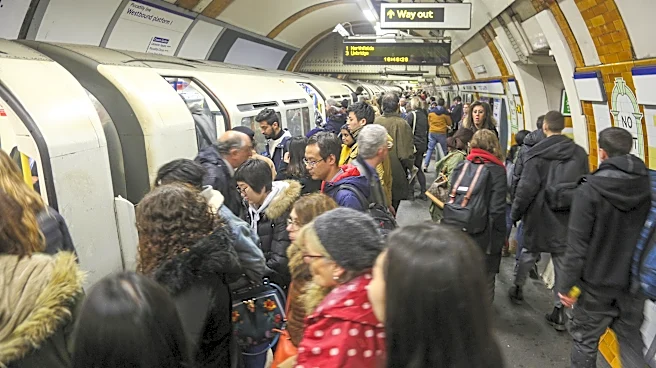
These strikes are poised to significantly disrupt London's transport network, particularly impacting commuters and the city's economy during the crucial Christmas trading period. Businesses, especially in the hospitality and retail sectors, are expected to suffer as fewer people may travel into the city for shopping and leisure. The London Chamber of Commerce and Industry has expressed deep concern, highlighting the vital importance of the pre-Christmas trading days. The dispute also underscores a broader tension between labor unions seeking to protect worker conditions and management aiming for operational efficiency and flexibility. The RMT's stance reflects a concern that seemingly beneficial changes, like a four-day week, can be used to erode existing protections and intensify workloads. The differing views between RMT and Aslef also highlight internal divisions within the labor movement regarding how to best navigate changes in working practices.
What's Next?
The announced strikes are set to proceed unless an agreement is reached between the RMT union and Transport for London. TfL has urged the RMT to present its proposals, which include options for drivers to remain on a five-day week at their current depots, to its members. Further negotiations are likely to occur as both sides face pressure to avoid widespread disruption, especially during the festive season. Commuters and businesses will need to monitor the situation closely and prepare for potential travel chaos on the strike days. The outcome of these negotiations could set a precedent for future discussions on working conditions and shift patterns within the transport sector, potentially influencing other industries considering similar operational changes. The impact on public perception of both TfL and the RMT will also be a factor as the dispute unfolds.
Beyond the Headlines
This dispute extends beyond immediate working conditions, touching upon the evolving nature of work-life balance and job security in modern industries. The RMT's argument that a 'voluntary' four-day week could still lead to job intensification and erosion of protections raises questions about the true voluntariness of such schemes when implemented by employers. It highlights the complex interplay between flexibility, efficiency, and worker welfare. The differing positions of the RMT and Aslef unions also reveal a broader ideological split within labor movements regarding how to adapt to new management proposals. This situation could influence future labor negotiations across various sectors, particularly as companies explore flexible working models. The long-term implications could include a re-evaluation of how 'voluntary' changes are introduced and the extent to which they genuinely benefit employees without compromising existing rights and conditions.