




What's Happening?
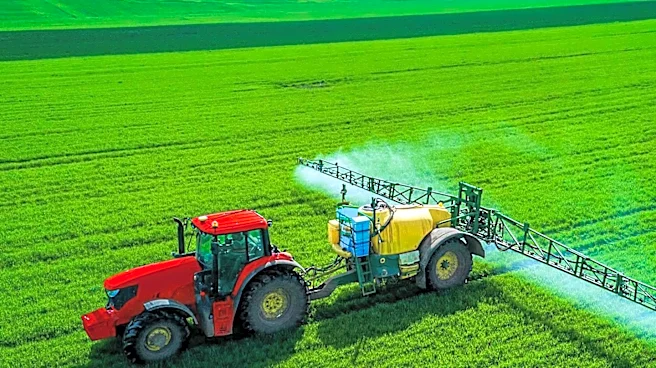
The United States is at risk of a food crisis stemming from potential shortages in the global fertilizer market, according to Jeff Steir, an advisor to the American think tank Heartland Institute. In a column for The Wall Street Journal, Steir highlighted
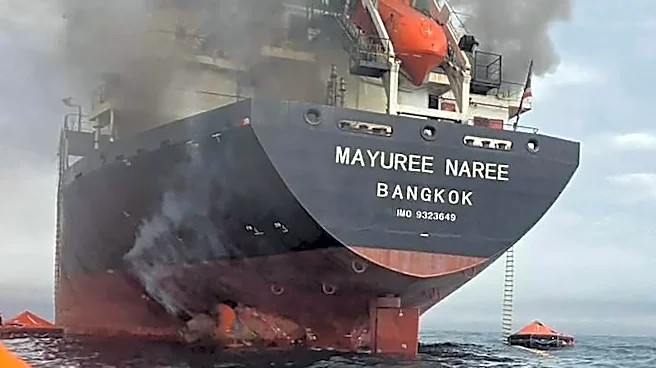
that China, Russia, and Iran exert significant control over the global fertilizer supply, which could lead to drastically increased food prices. He attributes the current instability in fertilizer prices to several factors, including the ongoing conflict in Ukraine, China's decision to reduce its fertilizer exports, and disruptions to shipping routes in the Strait of Hormuz. These geopolitical and logistical challenges are creating a volatile environment for a critical agricultural input.
Why It's Important?
A potential food crisis in the U.S. due to fertilizer shortages carries significant implications for the nation's economy and society. Sky-high food prices would directly impact American consumers, particularly low-income households, exacerbating food insecurity and potentially leading to broader economic instability. For the agricultural sector, increased fertilizer costs would squeeze profit margins for farmers, potentially leading to reduced crop yields or higher production costs that are passed on to consumers. The reliance on foreign nations for essential agricultural inputs also exposes a vulnerability in the U.S. supply chain, underscoring the interconnectedness of energy security and food security. This situation could prompt a reevaluation of domestic agricultural policies and supply chain resilience.
What's Next?
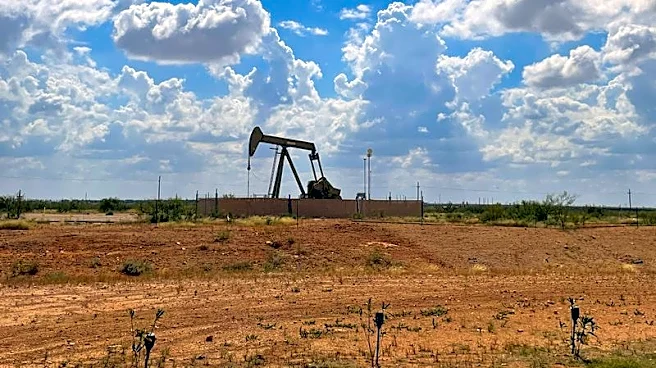
To mitigate the looming threat of a food crisis, Jeff Steir suggests that the U.S. administration should prioritize strengthening its domestic fertilizer supply chain. This involves increasing domestic oil and gas production, as natural gas is a crucial component for nitrogen fertilizers, and oil and gas refining yields sulfur, essential for phosphate fertilizers. The expert's recommendation underscores the belief that energy security and food security are inextricably linked. Future actions could involve policy initiatives aimed at incentivizing domestic fertilizer production, exploring alternative fertilizer sources, or engaging in diplomatic efforts to stabilize global supply chains. The U.S. government may also consider strategic reserves of key agricultural inputs to buffer against future disruptions.
Beyond the Headlines
The potential food crisis highlighted by the Heartland Institute advisor points to deeper geopolitical and economic vulnerabilities. The concentration of global fertilizer production in a few countries, particularly those with complex relationships with the U.S., creates a strategic dependency. This situation could trigger a broader debate on national self-sufficiency in critical sectors and the risks associated with globalized supply chains. Furthermore, it raises ethical questions about the weaponization of essential commodities in international relations. The long-term implications could include a shift towards more localized food production systems, increased investment in sustainable agricultural practices that reduce reliance on synthetic fertilizers, and a renewed focus on energy independence as a cornerstone of national security.