




What's Happening?
Researchers are developing new fabrication techniques for organic mixed ionic-electronic conductors (OMIECs) to advance wearable technology. OMIECs are crucial for bioelectronic devices because they can transport both ionic and electronic charges, bridging
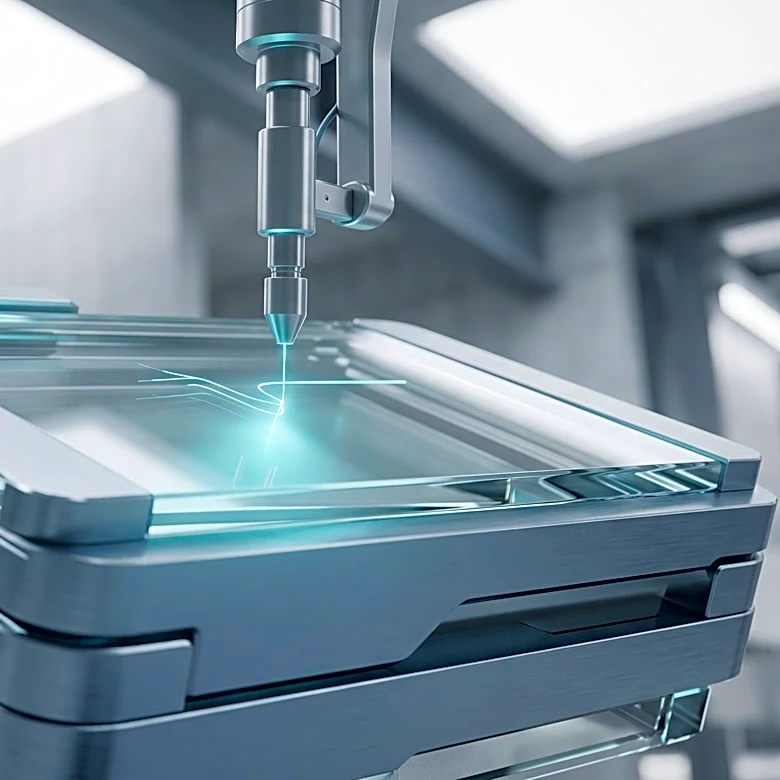
the gap between biological systems (which primarily use ions for signal transmission) and conventional electronics (which rely on electrons). These new techniques, particularly direct photopatterning, address challenges in manufacturing OMIECs, such as consistency, scalability, and the integration of multiple materials into a single device. Direct photopatterning uses ultraviolet (UV) light to define structures in a material, making it insoluble in exposed areas while unexposed areas can be removed with a solvent. This method is compatible with existing manufacturing processes and allows for the creation of reproducible and scalable device structures, as well as the patterning of different OMIEC materials on the same substrate without compromising performance. The research also explores the performance of organic electrochemical transistors (OECTs) in biological environments, including measuring ion concentrations in sweat, which offers insights into physiological conditions without invasive procedures.
Why It's Important?
These advancements are significant for the future of wearable technology and bioelectronic devices, particularly in the U.S. healthcare and consumer electronics sectors. Improved fabrication techniques for OMIECs will enable the development of more practical, reliable, and seamlessly integrated devices for everyday use. This could lead to more sophisticated health trackers and smartwatches capable of collecting detailed and meaningful health data, such as real-time ion concentration monitoring in sweat. Such non-invasive monitoring can provide valuable insights into a person's physiological condition, potentially revolutionizing preventive care and chronic disease management. The ability to create devices that interact more naturally and effectively with the human body, operating at low power and mimicking biological information processing, could lead to a new generation of personalized health monitoring tools. This innovation could benefit individuals seeking better health insights and healthcare providers looking for less invasive diagnostic and monitoring solutions, while also driving growth and innovation in the U.S. tech and medical device industries.
What's Next?
The immediate next steps involve further research into the long-term stability of OECTs in biological conditions to ensure their reliability for future applications. The focus will be on refining manufacturing processes to enhance consistency and scalability, making these advanced wearable technologies more accessible for mass production. As these techniques mature, we can expect to see the integration of these improved OMIECs into next-generation wearable health devices, potentially leading to clinical trials for new diagnostic and monitoring tools. The development of neuromorphic sensing and computing, inspired by biological systems, will likely continue, aiming to improve how electronic devices interact with the body. This could pave the way for devices that offer more intuitive and accurate health data, moving beyond current capabilities. Additionally, the commercialization of these technologies will depend on partnerships between research institutions and U.S. tech and medical device companies to bring these innovations to market.
Beyond the Headlines
The deeper implications of this research extend to the ethical and societal dimensions of pervasive health monitoring. As wearable devices become more integrated with the human body and capable of collecting highly detailed physiological data, questions about data privacy, security, and ownership will become increasingly critical. The ability to non-invasively monitor ion concentrations and other biological signals could lead to a shift towards highly personalized medicine, but it also raises concerns about potential misuse of sensitive health information. Furthermore, the seamless interaction between electronics and biological systems could blur the lines between human and machine, prompting philosophical discussions about human augmentation and the definition of health. The long-term shift could be towards a healthcare model that is far more proactive and predictive, driven by continuous, real-time biological data, potentially transforming how individuals manage their health and interact with medical professionals.