



What's Happening?
Rep. Sam Graves, a Missouri Republican, has voiced concerns regarding President Trump's proposal to exempt foreign beef from import taxes. This plan, intended to reduce beef costs, is seen by Graves as a 'short-term fix' that would negatively impact American
cattle producers. He emphasized that any efforts to lower beef prices should not come at the expense of ranchers. Graves's stance aligns with other Republicans from Kansas and Missouri, including Rep. Mark Alford and Sen. Jerry Moran, who have also criticized the plan. The U.S. Department of Agriculture attributes rising beef prices to factors such as prolonged drought, increased input costs for fertilizer and equipment, and consolidation within the beef-packing industry. The proposed exemption would apply to ground beef products at least 25% cheaper than the current market rate and would be in effect for 90 days, concluding after the November midterm elections.
Why It's Important?
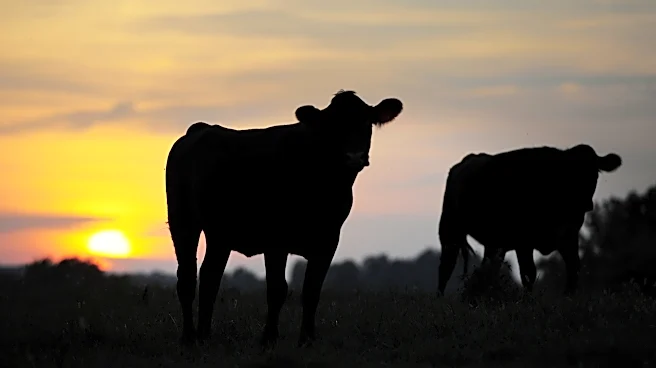
This development highlights a significant division within the Republican party, particularly among those representing agricultural states, regarding President Trump's economic policies. The proposed foreign beef imports could have substantial implications for the U.S. cattle industry, which is a major economic driver in states like Kansas and Missouri, home to the third and sixth-largest cattle herds, respectively. Ranchers and agricultural groups fear that an influx of cheaper foreign beef would depress market prices, making it harder for American producers to recover from existing challenges such as drought and high operating costs. This could discourage efforts to rebuild the U.S. cattle herd, potentially leading to long-term instability in the domestic beef supply chain. Democrats are observing this split, seeing an opportunity to appeal to rural voters who might feel alienated by policies perceived as detrimental to local agricultural interests.
What's Next?
The immediate future will likely involve continued debate and lobbying efforts from agricultural groups and lawmakers to influence President Trump's beef import plan. Sen. Jerry Moran has already called on President Trump to halt the proposed imports, indicating that further legislative or political pressure may follow. The 90-day exemption period, set to expire after the November midterm elections, suggests that the policy's longevity could be tied to political outcomes. Stakeholders, including cattle producers and their representatives, will be closely monitoring the market impact of any imported beef. The Democratic party, particularly representatives like Emanuel Cleaver and Sharice Davids, will likely continue to use this issue to court rural voters, potentially leading to increased bipartisan discussions on agricultural policy and support for domestic producers.
Beyond the Headlines
Beyond the immediate economic impact on ranchers, this situation underscores a broader tension between short-term consumer relief and long-term industry stability. While the aim is to reduce beef costs for consumers, the method of importing foreign beef could undermine the resilience and self-sufficiency of the U.S. agricultural sector. This raises questions about food security and the strategic importance of maintaining a robust domestic food supply. The political timing of the exemption, ending just after the midterm elections, also suggests a potential political motivation behind the policy, highlighting how economic decisions can be intertwined with electoral strategies. This could lead to a deeper examination of how trade policies are formulated and their potential for unintended consequences on vital domestic industries.