

What's Happening?
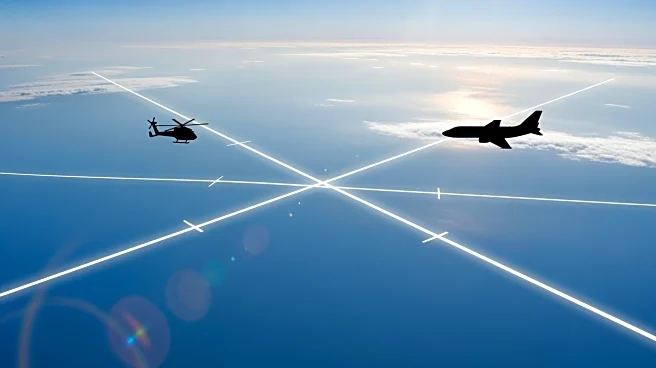
The Federal Aviation Administration (FAA) has introduced a new rule requiring air traffic controllers to use radar for separating planes and helicopters near airports. This change replaces the previous reliance on the 'see and avoid' practice, where pilots
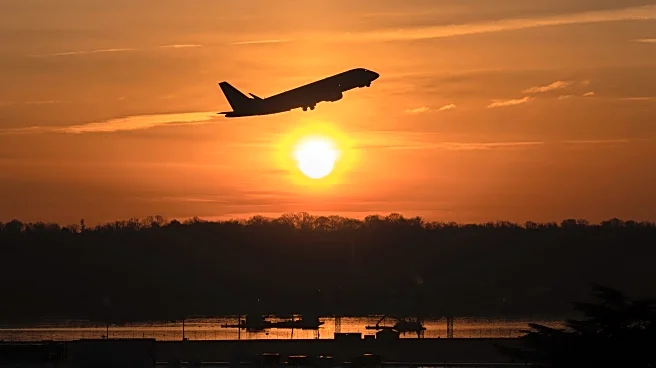
visually separate aircraft. The rule follows a fatal mid-air collision in January 2025 near Reagan National Airport, which highlighted the risks of visual-only systems. The collision involved an Army Black Hawk helicopter and an American Airlines regional jet, resulting in 67 fatalities. The National Transportation Safety Board's report on the incident pointed out the limitations of the 'see and avoid' concept, prompting the FAA to mandate radar use to improve safety.
Why It's Important?
The FAA's new rule is a significant step towards enhancing air traffic safety in the U.S. airspace. By mandating radar use, the FAA aims to reduce the risk of mid-air collisions, particularly in busy airport environments. This change addresses the limitations of visual separation, which can be unreliable at high speeds and in complex airspace. The rule is expected to improve safety for both commercial and military flights, potentially preventing future tragedies. It also reflects a proactive approach by the FAA to address safety concerns raised by past incidents, thereby increasing public confidence in air travel safety.
What's Next?
The implementation of the new radar rule will require adjustments in air traffic control operations and pilot training. The National Air Traffic Controllers Association has acknowledged the change, indicating that certified controllers will adhere to the new guidelines. The FAA may also need to invest in additional training and resources to ensure smooth integration of radar-based separation. As the rule takes effect, the aviation industry will likely monitor its impact on air traffic efficiency and safety. Further evaluations may lead to additional regulatory adjustments or technological advancements to enhance airspace management.