







What's Happening?
A U.S.-born Mexican gray wolf named 'Flor,' previously translocated to Chihuahua, Mexico, has crossed back into New Mexico through the state's remote Bootheel region. This movement underscores the critical need for maintaining and protecting cross-border
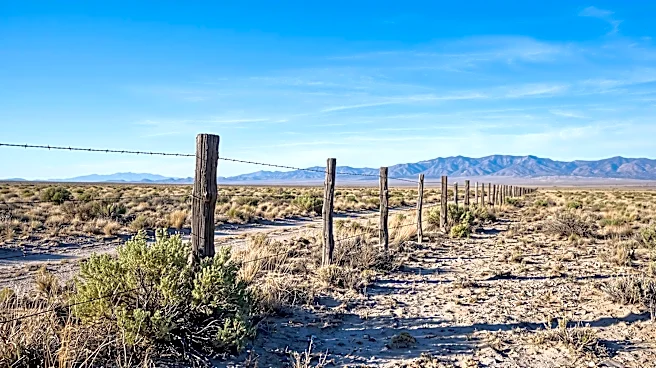
habitat connectivity, particularly in areas without border wall construction. Flor, a former breeding male of the Hardcastle Canyon pack, returned to his home state via one of the last unwalled stretches of the international boundary. This event highlights ongoing concerns from conservation groups regarding the ecological impact of border infrastructure, with protests against border wall construction continuing in southern Arizona. Conservationists argue that such barriers devastate ecological functions, sever habitat connectivity, and deplete aquifers, impacting numerous wildlife species beyond wolves.
Why It's Important?
The crossing of 'Flor' is significant because it vividly demonstrates the ecological necessity of permeable borders for wildlife, especially for endangered species like the Mexican gray wolf. This event reinforces arguments made by conservation advocates that border wall construction disrupts natural migration pathways, fragmenting habitats and threatening biodiversity. The movement of wolves across the border is crucial for genetic diversity and the long-term survival of the species, which was nearly driven to extinction. The incident also brings attention to the broader environmental consequences of border infrastructure, including the destruction of riparian areas and the impact on other species. It underscores the conflict between national security measures and ecological preservation, prompting calls for policies that balance both concerns and protect shared natural landscapes.
What's Next?
The return of 'Flor' is expected to intensify calls from conservation groups for a halt to further border wall construction in natural areas of Arizona, New Mexico, and Texas. Advocates will likely use this event to lobby for policies that prioritize habitat connectivity and ecological integrity along the U.S.-Mexico border. This could lead to increased public awareness campaigns and potential legal challenges against new border infrastructure projects. The incident may also prompt further scientific studies on the impact of existing barriers on wildlife movement and population dynamics. Stakeholders, including government agencies, environmental organizations, and local communities, will likely engage in ongoing discussions about how to manage border security while minimizing environmental damage and ensuring the survival of transboundary species.
Beyond the Headlines
The journey of 'Flor' transcends a single animal's movement, symbolizing a deeper ethical and ecological dilemma at the U.S.-Mexico border. It highlights the inherent conflict between human-defined political boundaries and the natural world's interconnectedness. The wolf's ability to traverse the border underscores the arbitrary nature of such divisions from an ecological perspective, revealing how human infrastructure can impose severe limitations on wildlife. This event also touches upon the cultural significance of these shared landscapes, which have historically been home to diverse communities and ecosystems. The ongoing debate over border walls, as exemplified by 'Flor's' crossing, forces a re-evaluation of conservation strategies, land management practices, and the long-term vision for coexisting with nature in a politically divided world. It challenges policymakers to consider the broader, long-term ecological costs of security measures.