



What's Happening?
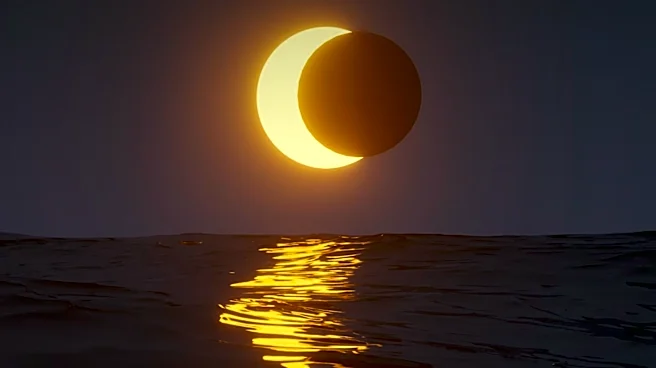
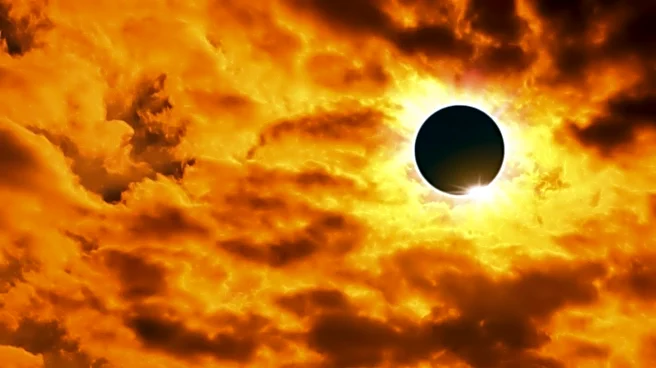
A total solar eclipse is set to occur on August 12, 2026, providing a rare opportunity for observers in certain parts of the world to witness the event at sunset. According to NASA, the eclipse will be visible in Greenland, Iceland, the northern half
of Spain, and a corner of Portugal. Spain, in particular, will experience the eclipse at sunset, offering a spectacular view. While most of Europe and parts of northern Africa will see a partial eclipse, Russia will uniquely experience the eclipse at both sunrise and sunset. This phenomenon is uncommon due to the specific timing and geographical path required for a sunset eclipse. The last notable sunset eclipse in North America occurred in 2014, though it was only partial.
Why It's Important?
This solar eclipse is significant as it offers a unique viewing experience that combines the beauty of a sunset with the rarity of a total eclipse. Such events are infrequent, making them a special occasion for astronomers and the general public alike. The eclipse's path across Europe and parts of Africa means that millions of people will have the chance to witness either a partial or total eclipse, potentially sparking interest in astronomy and science. Additionally, the event highlights the importance of international collaboration in scientific observation and public engagement in science.
What's Next?
For those in North America, the eclipse will not be as visible, with only a few states experiencing less than 20% coverage. However, this event may encourage future travel plans for eclipse enthusiasts and scientists aiming to study the phenomenon. Observers are advised to follow proper safety protocols when viewing the eclipse to prevent eye damage. The next opportunity for a similar event will likely not occur for another decade, emphasizing the rarity and significance of this eclipse.