
What's Happening?
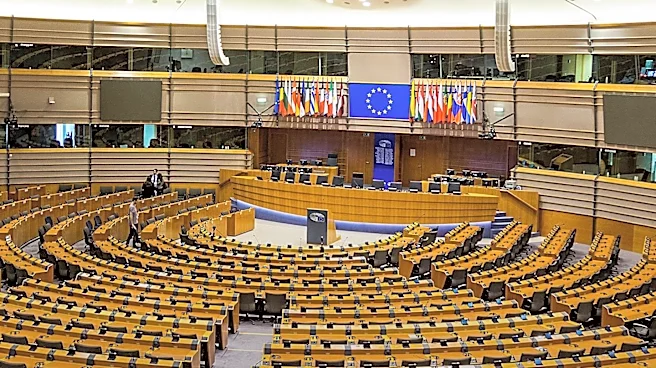
A new report presented to the European Parliament's Committee on Foreign Affairs describes the EU's Arctic policy as five years out of date and lacking a permanent institutional home within the European Commission.
The report, titled 'Focus on the High North: Upgrading the EU’s Arctic Policy and Protecting the EU’s Interests in a Rapidly Evolving Region,' argues that Iceland's recent rejection of EU membership talks should serve as a "wake-up call" for Brussels to re-evaluate its offerings to northern neighbors. Authored by Andreas Raspotnik, Adam Stępień, and Andreas Østhagen, the study highlights that the EU's 2021 Arctic policy no longer reflects current realities, particularly in light of Russia's full-scale invasion of Ukraine, which has shifted the focus to security, critical raw materials, and infrastructure protection. The report makes eight recommendations, including establishing a dedicated Arctic hub within the Commission and fostering a permanent partnership with non-EU Arctic states like Iceland, Norway, and Greenland.
Why It's Important?
The EU's outdated Arctic policy and the call for its overhaul have significant implications for U.S. strategic interests in the Arctic region. The U.S. views the Arctic as a critical geopolitical area, particularly concerning national security, resource extraction, and climate change. A more coherent and robust EU Arctic policy could either align with or diverge from U.S. objectives. If the EU strengthens its presence and cooperation with non-EU Arctic states, it could contribute to regional stability and responsible resource management, which are shared U.S. goals. However, if the EU's approach creates new geopolitical tensions or complicates existing alliances, it could challenge U.S. influence and strategic planning in the region. The report's emphasis on security and critical raw materials resonates with U.S. concerns about great power competition in the Arctic. The U.S. will likely monitor how the EU adapts its policy, as it could impact multilateral forums and bilateral relationships concerning Arctic governance and security.
What's Next?
The European Parliament's Committee on Foreign Affairs will likely consider the report's recommendations, potentially leading to legislative initiatives or policy adjustments within the EU. The call for a dedicated Arctic hub within the European Commission suggests a push for more centralized and strategic management of Arctic affairs. Discussions will likely focus on how to implement the eight recommendations, including fostering stronger partnerships with non-EU Arctic states and addressing the shift towards security concerns. The EU will need to articulate a clearer and more attractive offer to countries like Iceland, particularly on sensitive issues such as fisheries. The U.S. will observe these developments closely, as a revitalized EU Arctic policy could necessitate adjustments in U.S. diplomatic and strategic engagement in the region, potentially leading to new avenues for cooperation or areas of policy divergence.
Beyond the Headlines
Beyond the immediate policy adjustments, this report highlights the profound geopolitical shifts occurring in the Arctic, driven by climate change and increased great power competition. The melting ice caps are opening new shipping routes and access to resources, transforming the region from a remote frontier into a strategic hotspot. The EU's struggle to adapt its policy reflects a broader challenge for international actors to respond effectively to rapid environmental and geopolitical changes. The "wake-up call" from Iceland's 'no' vote also underscores the importance of local and regional perspectives in shaping international policy, particularly in areas with unique cultural and economic sensitivities. This situation prompts deeper questions about the future governance of the Arctic, the role of non-Arctic states, and the balance between economic development, environmental protection, and national security in a rapidly changing global landscape. For the U.S., these developments necessitate a continuous re-evaluation of its own Arctic strategy to ensure it remains relevant and effective amidst evolving international dynamics.